Decorative solar garden lighting performs best when it is treated as an outdoor ¡°lighting plan,¡± not a collection of individual products. A well-lit yard uses layered illumination¡ªguidance for walking, ambience for gathering, and accents for plants and textures¡ªwhile respecting solar charging constraints, waterproof ratings, and seasonal differences in daylight.
This guide focuses on practical design outcomes and measurable specifications that influence results: color temperature, IP ratings (IP44/IP65), typical 6¨C8 hour worktime claims for solar garden lights, and how different decorative families (string lights, lanterns, rattan styles, pathway lights, and mosaic jar accents) behave in real yards.
What ¡°Decorative Solar Garden Lights¡± Should Achieve
In top-performing outdoor lighting layouts, ¡°decorative¡± does not mean ¡°bright.¡± It means the yard reads as intentional at night: visitors can navigate safely, the patio feels inviting, and focal points are highlighted without glare. Most successful installations deliver four outcomes:
- Guidance lighting along paths, steps, and transitions
- Ambient lighting for seating and dining zones
- Accent lighting to add depth (shrubs, borders, textured walls)
- Task/utility lighting for sheds, gates, and storage access
Decorative solar products are especially effective for ambience and accent work, because they can be distributed across the landscape without wiring. However, the design must account for solar limitations: charging depends on sun exposure, and performance shifts with season and weather.
LSI Terms Integrated in This Pillar
Throughout this article, the content naturally covers related search intent terms such as solar pathway lights, solar string lights, outdoor decorative lighting, garden accent lighting, warm white 2200K¨C2700K, weatherproof outdoor lights, IP65 waterproof, charging efficiency, patio lighting ideas, and landscape lighting placement.
SHINEU Product and Factory Signals That Matter for EEAT
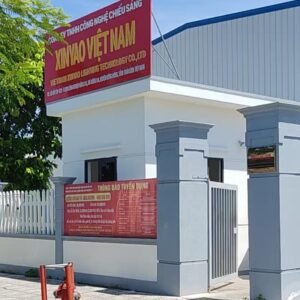
For buyers planning a consistent yard aesthetic¡ªor sourcing at scale¡ªsupplier credibility affects long-term reliability. According to SHINEU¡¯s published company information, SHINEU LIGHTING TECHNOLOGY CO., LTD. was founded in 2009 and operates as a manufacturer and supplier of holiday and seasonal decorative lighting, including solar garden lights and outdoor decorative lights, with customers in North America, Europe, and the UK. The company states it operates a 5,000-square-meter production facility in Vietnam serving US, UK, and German markets, and that its products are certified to UL, CUL, CE, and GS standards.
Readers looking to browse categories can review Garden Lights and the dedicated Solar Garden Light category, which lists multiple decorative families (for example, S14/G40 solar strings, fairy and flower decorative styles, garden shed solar lights, and other ¡°decorative solar lights for garden¡± variations).
For manufacturing background and certifications, the Garden Lights Factory page provides the clearest summary; for a broader service overview, see the Garden Lights manufacturer homepage.
The Non-Negotiables: Specifications That Predict Real-World Results
Color temperature: why 2200K¨C2700K dominates decorative yards
Decorative lighting is primarily emotional. Warm ranges such as 2200K¨C2700K are widely used for patio and festive environments because they reduce the ¡°harshness¡± that can flatten landscaping at night. SHINEU¡¯s published product positioning repeatedly highlights warm output in this range for holiday and outdoor decorative lighting. In design terms, warm tones typically complement wood, stone, brick, and foliage more naturally than cool white.
Worktime: planning around the 6¨C8 hour reality
SHINEU states that many garden lighting products, including solar garden lights, operate for approximately 6¨C8 hours. This is a practical planning number for decorative scenes: it typically covers the early evening peak-use window, but it may not last until dawn¡ªespecially in winter, on cloudy days, or in shaded yards.
Waterproofing: IP44 vs IP65 is a placement decision
Waterproof ratings should match exposure. SHINEU emphasizes IP65 waterproof for harsh outdoor weather on its homepage, while also presenting product ranges that include IP44/IP65. In practice:
- IP44 often fits sheltered zones (covered porches, pergolas, protected corners).
- IP65 is generally safer for open yards, sprinkler exposure, and wind-driven rain.
Materials: decorative durability comes from matching climate
Common material combinations for decorative solar families include metal + plastic, plastic, plastic rattan + iron wire, and glass + stainless steel + plastic. In high-humidity or coastal regions, buyers should prioritize corrosion resistance and sealed connectors as much as daytime appearance.
Data Table 1 ¡ª Practical Selection Matrix (by yard objective)
| Lighting family | Primary function | Best placement zones | Common failure mode | Mitigation |
|---|---|---|---|---|
| Solar string lights (S14/G40) | Ambience / overhead definition | Patio, pergola, fence line | Panel shade; wind stress | Place panel in direct sun; relieve tension with anchors |
| Fairy solar lights | Accent sparkle | Shrubs, small trees, railings | Insufficient for navigation | Pair with low-glare pathway lighting |
| Flower solar lights | Decorative border styling | Beds and edges | Looks random if scattered | Use clusters of 3¨C5 as repeating motifs |
| Rattan/lantern solar lights | Mood and shadow texture | Seating edges, corners, steps | Weak effect if too far from surfaces | Place near walls/pavers to catch projection |
| Solar pathway lights | Guidance and edge definition | Paths, turns, driveway edge | Glare or ¡°runway¡± look | Lower intensity; space by turns/steps rather than symmetry |
Data Table 2 ¡ª Waterproof Rating by Exposure Scenario
| Exposure scenario | Recommended target | Why it matters | Design note |
|---|---|---|---|
| Covered patio / porch | IP44 often adequate | Lower direct water impact | Focus on mounting stability and UV resistance |
| Open yard, frequent rain | IP65 waterproof | Better sealing against wind-driven rain and dust | Prefer fewer, better-sealed fixtures for longevity |
| Sprinkler zone / near mulch | IP65 + corrosion-resistant hardware | Repeated splash accelerates failures | Keep connectors off ground; avoid pooling areas |
| Coastal / salty air | IP65 + stainless/treated finishes | Salt accelerates corrosion and connector degradation | Choose materials intentionally; plan replacement cycles |
Data Table 3 ¡ª Example Spec Ranges (as published across SHINEU product families)
| Family / example models | Color temperature | Voltage range shown | Waterproof index | Best-use interpretation |
|---|---|---|---|---|
| Solar string series (E12/G40, E26/S14) | 2200K¨C2700K | 3V¨C4.5V (solar variants shown) | IP44 (examples shown) | Patio ambience; keep panels unshaded |
| Outdoor string / garden light series (E26/S14) | 2200K¨C2700K | 120V¨C230V | IP65 (example shown) | Wired-style durability emphasis for open exposure |
| Injection molding series (E17) | 2200K¨C2700K | 120V¨C230V | IP65 (example shown) | Seasonal/festive strings in harsher weather |
| RGBW series (S14/E26) | RGBW | 5V¨C24V | IP65 (examples shown) | Event scenes; dynamic color; prioritize sealing |
| Mini light string (5MM, C6, G12) | 2200K¨C2700K | 120V¨C230V | IP65 (examples shown) | Trees/hedges/holiday d¨¦cor; plan anchor points |
Note: The table summarizes published ranges shown across SHINEU pages and provided product parameter sheets; individual SKUs vary by series and market requirements.
A Yard-Lighting Framework That Works with Solar
Professional-looking outdoor lighting usually follows a ¡°layering¡± approach. Solar can deliver that effect if each product is assigned a specific job and placed where it can charge reliably.
Layer 1: Guidance (safety and flow)
Guidance lighting makes a yard usable. The goal is legibility¡ªedges, steps, and turns¡ªrather than maximum brightness. Solar pathway lights can be effective here, but overuse often creates glare or a ¡°runway¡± look. A better approach is to concentrate lights at decision points (stairs, bends, transitions) and reduce density on straight segments.
Layer 2: Ambience (the social center)
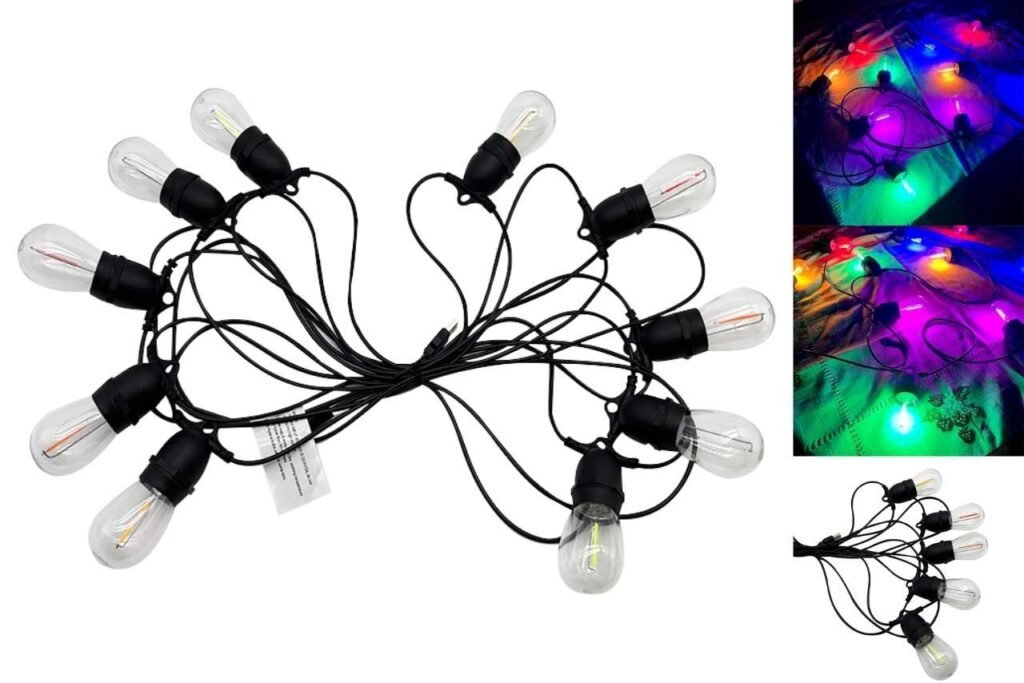
Ambience is where decorative solar lighting delivers the most perceived value. Solar string lights in warm white (2200K¨C2700K) can create an ¡°outdoor ceiling¡± that visually defines seating and dining areas. Lantern-style and rattan decorative lights reinforce this layer by creating pools of warmth at corners.
Layer 3: Accent (depth, texture, and focal points)
Accent lighting prevents a flat scene. It highlights foliage texture, architectural surfaces, and garden features. Decorative options such as mosaic jar lights, shadow-casting metal lanterns, and fairy lights on trellises can create depth¡ªespecially when placed near surfaces that catch light patterns.
Placement Rules by Zone (Where Most Installations Go Wrong)
Walkways, turns, and steps
- Place fixtures where the user¡¯s foot placement changes: stair landings, path turns, gate thresholds.
- Avoid positioning lights at eye level from a seated area; glare reduces perceived quality.
- If a path is bordered by plants, keep panels free from leaf cover to protect charging efficiency.
Patios and pergolas
Patios are the most forgiving zone for decorative solar lighting because people sit and spend time there. Overhead strings (S14/G40 style) are the fastest upgrade. The key constraint is the panel: it must receive direct sun for meaningful daytime charging. If the pergola shades the panel, the lights may turn on but fade early¡ªespecially outside peak summer.
Garden beds and borders
Decorative products like flower solar lights look strongest when arranged in clusters and repeated at intervals, rather than placed in perfect symmetry. For visual coherence, repeat one or two fixture styles and keep the rest of the bed darker; this produces contrast and makes highlighted textures more visible.
Fences and walls (the ¡°multiplier¡± surfaces)
Walls amplify decorative lighting. Shadow-casting lanterns and fairy lights show their best effect when their output hits a nearby surface, creating pattern and depth. If fixtures are placed too far from any surface, the yard often looks underwhelming even when multiple lights are installed.
Sheds and storage corners
Utility lighting improves the yard¡¯s usability. Category listings for solar garden lights include ¡°garden shed solar lights,¡± which can be treated as a functional layer that supports decorative planning. When sheds and gates are usable after dark, decorative lighting can focus on mood instead of compensating for darkness.
Decorative Solar Light ¡°Recipes¡± (Proven Combinations)
Recipe 1: Caf¨¦ Patio (warm, social, low-glare)
- Solar string lights overhead in 2200K¨C2700K
- Two lantern/rattan accents at seating corners
- Minimal pathway guidance from door to seating area
Recipe 2: Garden Border Focus (depth for planting design)
- Clusters of flower solar lights repeated every few meters
- One or two mosaic jar accents at turns or entry points
- Optional fairy lights on a trellis to connect vertical space
Recipe 3: Modern Minimal (clean lines, fewer fixtures)
- Uniform pathway lights with ¡°decision-point¡± density (steps and turns)
- One statement lantern that casts a defined pattern on pavers
- Avoid mixing too many bulb shapes; keep finishes consistent
Recipe 4: Event Mode (RGBW for holidays and parties)
RGBW strings and bulbs create dynamic scenes for celebrations. Published product positioning highlights RGBW support and IP65 waterproof options in SHINEU¡¯s range. For day-to-day use, many homeowners return to warm white because it feels calmer and more ¡°architectural.¡± A practical approach is to reserve RGBW for events while keeping the base yard design warm.
Sourcing and Scale: What Global Buyers Typically Evaluate
In consumer SERP results, buyers often focus on style and reviews. For B2B buyers, long-term satisfaction typically depends on consistent production, compliance, and the ability to support customization. SHINEU states it offers OEM and ODM services, with production bases in China and Vietnam and export orientation (with published metrics indicating 100% export and a large share to North America and Europe). It also publishes certification coverage (UL, CUL, CE, GS), which is a standard requirement for multiple destination markets.
Buyers comparing decorative solar programs often evaluate:
- Certification alignment with target markets (for example UL/CE where applicable)
- Waterproof rating strategy (IP44 vs IP65 mapped to customer use cases)
- Color temperature consistency across product families (2200K¨C2700K for warm scenes)
- Supply chain responsiveness for seasonal demand peaks
- Customization capability for packaging, cable color, bulb shapes, and program-specific requirements
FAQ
How can a yard look ¡°professionally lit¡± with solar decorative lights?
The most reliable method is layered planning: guidance lighting for paths and steps, ambience lighting for seating zones (often overhead solar string lights), and a limited number of accents to create focal points. Consistent finishes and warm color temperature (commonly 2200K¨C2700K) help the scene look cohesive rather than cluttered.
Is 6¨C8 hours of solar runtime enough for everyday use?
For most decorative applications, yes¡ªbecause it covers the evening window when the yard is typically used. SHINEU states many garden lights operate for roughly 6¨C8 hours, but actual runtime depends on sun exposure, season, and lighting mode. If all-night illumination is required, solar decorative lighting is often paired with wired or low-voltage solutions in key zones.
When should IP65 be prioritized over IP44?
IP65 should be prioritized in open yards with heavy rain, wind-driven storms, sprinkler exposure, or dusty environments. IP44 can be appropriate for sheltered placement such as covered patios. The correct choice is less about ¡°best¡± and more about matching the waterproof rating to real exposure.
What is the most common reason decorative solar lights disappoint?
The most common cause is poor charging conditions¡ªsolar panels placed in shade, under trees, or on north-facing surfaces with limited direct sunlight. The second is using decorative accent products as if they were path or task lighting. Performance improves when each fixture is assigned a clear role and the panel is placed for reliable charging.
References and Source Notes
The content above synthesizes SHINEU¡¯s published company and product-category information (factory footprint, certifications, export positioning, product families and published spec ranges) with widely used outdoor lighting planning principles reflected across high-ranking consumer resources (layered lighting, glare control, path/step prioritization, and patio ambience strategies).
SHINEU source pages cited
- SHINEU Home (services, IP65 emphasis, product overview, warm light positioning): https://shineulight.com/
- SHINEU About (founded 2009; Vietnam 5,000 m2 facility; UL/CUL/CE/GS; export metrics; OEM/ODM): https://shineulight.com/about/
- Solar Garden Light category (decorative solar families listed): https://shineulight.com/product-category/garden-lights/solar-garden-light/
- Garden Lights category (broader product context): https://shineulight.com/product-category/garden-lights/
External SERP references (outbound links)
- The Spruce (consumer outdoor lighting planning conventions)
- Royal Horticultural Society (RHS) (garden layout context for paths, borders, and focal points)
- The Home Depot (mainstream outdoor lighting categories and installation realities)
- Lowe¡¯s (category conventions and homeowner guidance)
- Bob Vila (practical outdoor lighting considerations)
- The New York Times Wirecutter (review methodology and buyer expectation signals)
- VOLT Lighting (landscape lighting education and design frameworks)
- Kichler (lighting category language and placement concepts)
- Lamps Plus (outdoor lighting buyer education and style cues)
- Amazon (marketplace feature patterns and consumer expectation signals)