Determining how long to leave indoor garden grow lights on depends on the specific Daily Light Integral (DLI) requirements of your plant species, typically ranging from 12 to 18 hours of continuous illumination. For high-biomass herbs and vegetables, the definitive goal is to replicate the photoperiod of a peak summer day to drive photosynthesis without causing cellular stress. While many assume continuous 24-hour light maximizes growth, plants require a dark period (respiration phase) to process stored energy and maintain metabolic health. Utilizing professional-grade infrastructure, such as systems from a specialized Garden Lights manufacturer, allows for the precise automation of these light cycles through integrated smart controllers and high-efficacy LED engines.
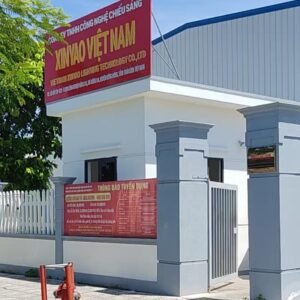
As a global Garden Lights Factory, ShineU Lighting (Huizhou Xinyao Lighting Technology Co., Ltd.) has engineered professional illumination since 2009. Our manufacturing pedigree, validated by ISO 9001:2015 and global certifications (UL, CE, GS), ensures that our 3V-4.5V low-voltage DC systems provide the stability required for long-duration operation. While our Solar Garden Light series utilizes monocrystalline silicon panels for 6 to 8-hour nightly work times outdoors, our indoor grow light technology is built for the intensive 12-18 hour cycles necessary for domestic horticultural success. This guide analyzes the technical and biological metrics for optimizing indoor light duration.
The Biological Clock: Understanding Photoperiodism
Plants are classified by their response to light duration, a phenomenon known as photoperiodism. To determine how long to leave grow lights on, you must categorize your garden by its “day-length” sensitivity. In 2026, horticulturalists prioritize DLI (Daily Light Integral)¡ªthe total amount of Photosynthetically Active Radiation (PAR) delivered over a 24-hour window¡ªas the primary metric for growth success.
- Short-Day Plants: Require long periods of darkness to trigger flowering (e.g., Poinsettias). These usually require 10¨C12 hours of light.
- Long-Day Plants: Most culinary herbs (Basil, Dill) and vegetables thrive with 14¨C18 hours of light, mimicking mid-summer conditions.
- Day-Neutral Plants: Species like tomatoes or cucumbers focus on the total photon flux received regardless of the light-to-dark ratio, though 16 hours is generally the high-performance benchmark.
The Necessity of the Dark Period: Cellular Respiration
Leaving lights on for 24 hours is a common misconception. During the “dark phase,” plants engage in cellular respiration, breaking down the glucose created during the day to provide energy for growth. Without this recovery period, plants can suffer from photo-inhibition, where the photosynthetic apparatus becomes damaged by excessive photon bombardment, leading to chlorosis (yellowing) and stunted development.
| Plant Stage | Recommended Duration | Biological Focus |
|---|---|---|
| Seedling/Propagation | 16 ¨C 18 Hours | Rapid leaf and root expansion |
| Vegetative Growth | 14 ¨C 16 Hours | Structural biomass & oil production |
| Flowering/Fruiting | 12 ¨C 14 Hours | Energy redirection to reproductive organs |
Technical Infrastructure for Long-Duration Operation
Maintaining an 18-hour light cycle puts significant stress on the LED engine and its thermal management system. Utilizing professional Garden Lights technology ensures the fixture can handle these extended work times. ShineU Lighting utilizes high-efficiency SMD LED chips and injection molding with heat-conductive materials to dissipate thermal energy effectively, preventing the “lumen depreciation” associated with low-quality hardware.
For sustainable indoor setups, the USB & Solar Hybrid system allows growers to harvest energy through windows using monocrystalline silicon panels. This stored energy, managed by a LiFePO4 battery, can supplement grid power during peak hours, ensuring your indoor garden remains energy-efficient while adhering to its 16-hour growth schedule.
Manufacturing Standards for Global Sourcing
When wholesalers procure grow lights or Solar Garden Light inventory, the stability of the 3V-4.5V low-voltage electronics is paramount for long-duration safety. ShineU Lighting operates 5,000 square meter production facilities in China and Vietnam, specializing in ODM, OEM, and OBM for the US, UK, and German markets. Every product undergoes automated inspection to confirm IP ratings and electrical stability, ensuring that our lights are safe to leave on for 18 hours a day, year-round, without risk of failure or fire hazard.
Grow Light Duration FAQ
1. Can I leave my grow lights on 24/7?
It is not recommended. While some plants can tolerate it, most require at least 6 hours of darkness for metabolic respiration. Continuous light can stress the plant, leading to lower yields and higher energy costs.
2. What happens if I forget to turn the light off?
An occasional 24-hour light cycle won’t kill your garden, but frequent disruptions to the photoperiod can cause plants to become “confused,” potentially leading to hermaphroditism in some species or the premature end of their growth cycle.
3. Are solar garden lights powerful enough for 18-hour indoor use?
Generally, no. Standard solar lights are decorative (2200K-2700K) and only have 6 to 8-hour nightly work times. For a productive herb garden, you need grid-powered or USB hybrid grow lights that provide a higher PAR output.
4. Does the distance from the plant change how long the light should stay on?
No, duration (time) and intensity (distance) are separate variables. If the light is farther away (lower intensity), you cannot simply “make up” for it by leaving it on longer; the plant needs a specific photon density to trigger growth.
5. Is it safe to leave grow lights on while I am at work?
Yes, if you use UL/CE certified fixtures with 3V-4.5V low-voltage drivers. These are engineered for industrial-grade safety and continuous operation in residential environments.
6. Does ShineU offer customization for smart-timer integration?
Yes. As a comprehensive Garden Lights Factory, our ODM services allow B2B clients to integrate customized smart-timers and spectrum controls into their private-label grow light designs.
Expert References & Technical Sources
- ShineU Lighting (Huizhou Xinyao): 15-Year Manufacturing Excellence and ISO9001 Compliance
- Royal Horticultural Society (RHS): Understanding Plant Responses to Light Duration
- U.S. Department of Energy: Efficiency and Photoperiod Management in Grow Systems
- The Spruce: A Beginner¡¯s Guide to Grow Light Scheduling and DLI Optimization