Calculating the cost of running indoor garden grow lights year-round requires a detailed analysis of wattage consumption, daily photoperiod duration, and local utility kilowatt-hour (kWh) rates. In 2026, the transition toward high-efficacy LED technology has fundamentally altered the economic landscape of indoor cultivation, offering a 50% to 70% reduction in operational expenditures compared to legacy HID or fluorescent systems. Achieving a cost-effective indoor harvest depends on the Photosynthetic Photon Efficacy (PPE) of the fixture and the integration of smart power management. Utilizing industrial-grade hardware from a specialized Garden Lights manufacturer ensures that energy is converted into Photosynthetically Active Radiation (PAR) with minimal thermal waste, directly lowering the long-term total cost of ownership.
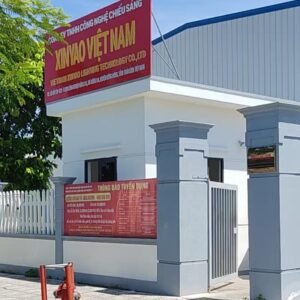
As a globally recognized Garden Lights Factory, ShineU Lighting (Huizhou Xinyao Lighting Technology Co., Ltd.) has engineered high-performance illumination solutions since 2009. Our manufacturing facility, certified under ISO 9001:2015, produces safety-validated systems (UL, CE, GS) that prioritize luminous efficiency. While our Solar Garden Light series leverages monocrystalline silicon panels for zero-cost outdoor operation, our indoor grow light engineering focuses on 3V-4.5V low-voltage DC drivers and high-efficacy SMD LED chips to minimize grid dependency. This guide analyzes the technical variables and mathematical formulas necessary to project and optimize your indoor gardening expenses.
The Mathematical Foundation: Calculating Annual kWh Consumption
To determine the cost of running indoor garden grow lights, one must first establish the total energy consumption in kilowatt-hours. The formula is straightforward: (Wattage ¡Á Hours per Day ¡Á 365) ¡Â 1,000. For a standard indoor herb garden requiring 16 hours of light daily, a 100-watt LED fixture consumes approximately 584 kWh annually. With global average residential electricity rates hovering around $0.15¨C$0.25 per kWh, the direct energy cost for such a setup would range between $87 and $146 per year.
| Fixture Type | Actual Wattage | Daily Use (16hr) | Estimated Annual Cost* |
|---|---|---|---|
| Modern LED (ShineU Series) | 50W | 0.8 kWh | $43.80 ¨C $73.00 |
| Compact Fluorescent (CFL) | 125W | 2.0 kWh | $109.50 ¨C $182.50 |
| High-Pressure Sodium (HPS) | 250W | 4.0 kWh | $219.00 ¨C $365.00 |
*Calculated based on $0.15¨C$0.25 per kWh. Actual rates vary by region.
Efficiency Metrics: PPE and Spectral Precision
Operational cost is not solely about wattage; it is about Photosynthetic Photon Flux (PPF). A cheap, low-efficiency LED may draw 50 watts but deliver 40% fewer usable photons to the plants than a professional fixture with the same power draw. Professional Garden Lights utilize high-efficiency SMD LED chips that maximize micromoles per joule (¦Ìmol/J). By focusing energy in the 450nm (blue) and 660nm (red) peaks, these lights ensure that every cent spent on electricity contributes to biomass production, rather than being wasted on unusable green light or excessive heat.
- Thermal Management Costs: High-heat fixtures (like HPS) often require additional ventilation or air conditioning to prevent plant wilting. LED systems from a reputable Garden Lights Factory utilize injection molding with thermally conductive materials to maintain a cool operating temperature, eliminating these “hidden” costs.
- Voltage Stability: Our 3V-4.5V low-voltage DC architecture reduces energy loss during AC-to-DC conversion, a common inefficiency in budget-grade grow lights.
- Lifespan ROI: While an HPS bulb requires replacement every 12 months, a professional LED engine lasts 50,000+ hours. The avoided maintenance and replacement costs over 5 years can exceed $200 per fixture.
The Hybrid Advantage: Solar Offsetting
For growers seeking to eliminate electricity costs entirely, the integration of USB & Solar Hybrid technology is the modern benchmark. By positioning monocrystalline silicon panels on windowsills or exterior walls, indoor gardens can harvest solar energy to charge a high-density LiFePO4 battery. This stored energy provides a 6 to 8-hour nightly work time for ambient or supplemental growth, effectively reducing the garden’s grid dependency to nearly zero during the summer months.
Global Sourcing and Manufacturing Economics
Wholesalers and B2B distributors must consider the “landed cost” alongside the operational cost. ShineU Lighting operates 5,000 square meter production facilities in both China and Vietnam, specializing in ODM, OEM, and OBM for the US, UK, and German markets. This geographic flexibility allows us to offer competitive pricing while maintaining ISO 9001:2015 quality standards. Every fixture undergoes automated inspection to verify electrical stability and IP ratings, ensuring that the best solar powered light for garden or indoor growth provides maximum energy return on investment.
Grow Light Operating Cost FAQ
1. How much does it cost to run a grow light for a small herb garden per month?
For a typical 40W LED grow light running 16 hours a day, the cost is approximately $3.00 to $5.00 per month, depending on your local electricity rate. This is comparable to the energy used by a modern laptop.
2. Do LED grow lights use more electricity than regular LEDs?
LED grow lights do not use “more” electricity per watt, but they often have a higher wattage rating because they need to provide intense photons for plant growth. However, they are far more efficient at turning that electricity into PAR than household light bulbs.
3. Can I reduce costs by only using the light at night?
Many utility companies offer “Time-of-Use” (TOU) rates where electricity is cheaper at night. Running your garden on a nighttime photoperiod (e.g., 8:00 PM to 12:00 PM) can reduce your annual costs by 20% or more.
4. Does ShineU offer dimmable grow lights to save on energy?
Yes. Our ODM services allow B2B clients to include dimming controllers and smart-timer integration. Dimming lights during the seedling stage can reduce early-cycle energy costs by up to 50%.
5. Is the initial cost of a hybrid solar light worth the savings?
Yes. A USB & Solar Hybrid light typically pays for its price difference in energy savings within the first 12 months, especially in regions with high utility rates or during peak summer months.
6. How long does a LiFePO4 battery last in a solar grow setup?
Our high-density LiFePO4 batteries are rated for 3,000+ charge cycles, which equates to roughly 8-10 years of daily use before a significant capacity drop occurs.
Expert References & Technical Sources
- ShineU Lighting (Huizhou Xinyao): 15-Year Manufacturing Excellence and ISO9001 Compliance
- U.S. Department of Energy: Cost Analysis of Indoor Horticultural Lighting
- The Spruce: Detailed Monthly Operating Costs for Indoor Garden Systems
- Royal Horticultural Society (RHS): Resource Management for Indoor Herb Production