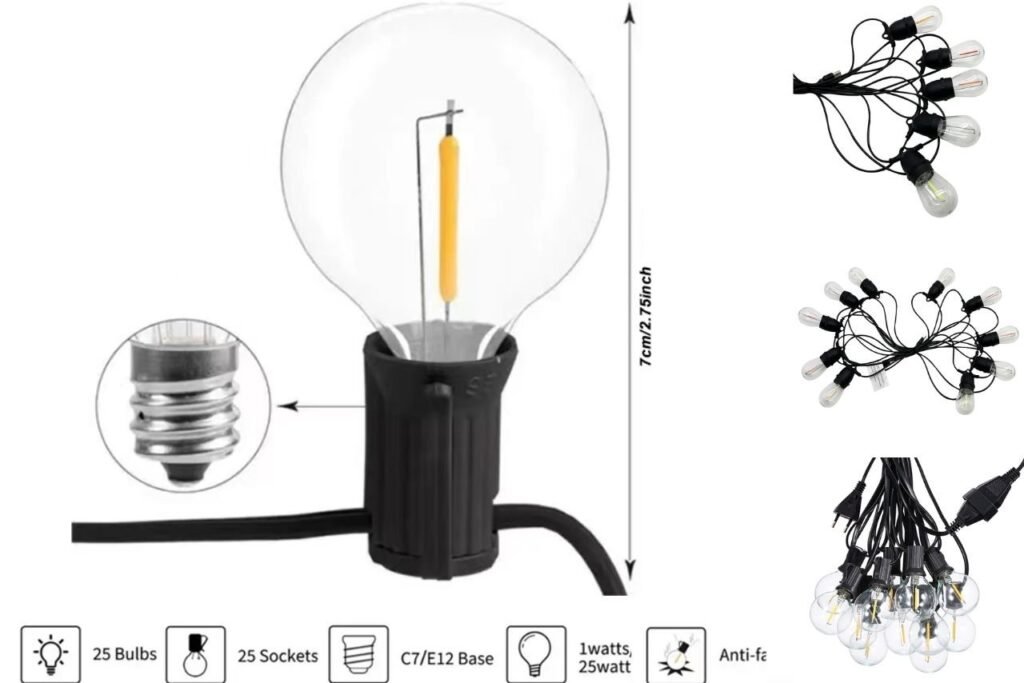
Low voltage garden lights (most commonly 12V landscape systems) are one of the easiest ways to add safe, attractive outdoor lighting for pathways, patios, trees, and yard features. Compared with mains-voltage fixtures, low voltage lighting is generally simpler to expand and adjust, and it can deliver a ¡°layered¡± look¡ªsoft path guidance plus accent lighting¡ªwithout harsh glare.
Contents
- What are low voltage garden lights?
- Benefits (and limitations) vs. other options
- Planning: layout, beam angles, and brightness
- Step-by-step installation (practical walkthrough)
- Transformer sizing & voltage drop made simple
- Timers, photocells, and smart control
- Reviews: what users tend to love (and dislike)
- Common problems & fixes
- Related SHINEU pages (internal links)
- References
What are low voltage garden lights?
A low voltage garden lighting system typically includes:
- Transformer (converts household power to low voltage output)
- Low voltage cable (runs through the yard to feed fixtures)
- Fixtures (path lights, spotlights, wall washers, step lights, etc.)
- Connectors (to splice fixtures into the main cable)
Most homeowners choose low voltage for safety and flexibility: you can reposition fixtures as plants grow, add lights later, or change the scene seasonally.
Benefits (and limitations) vs. other options
Key benefits
- Safer in wet environments than line voltage runs
- Easy to expand (add fixtures by splicing into the cable)
- Better control over ¡°layered¡± aesthetics (path + accent + feature)
- Energy efficient when using LEDs
Common limitations
- Voltage drop can dim fixtures at the end of long runs
- Connector quality matters (cheap taps corrode or loosen)
- Upfront planning needed for best uniformity
- Not always ¡°set-and-forget¡±¡ªgardens change
Planning: layout, beam angles, and brightness
Start with your lighting goals
- Path safety: define edges and prevent trip hazards.
- Accent: highlight a tree canopy, sculpture, or textured wall.
- Ambient: soft glow near seating and entertaining areas.
Choose fixture types intentionally
- Path lights: for guidance (avoid overly bright ¡°runway¡± look).
- Spotlights / uplights: for trees, columns, focal features.
- Downlights: ¡°moonlight¡± effect from above (requires mounting points).
Color temperature and ¡°warmth¡±
Warm white is popular for gardens because it feels inviting and reduces the ¡°clinical¡± look of cool white. SHINEU¡¯s home page describes multiple decorative product families using 2200K¨C2700K warm light (e.g., Christmas lights and bulb models), a range that also tends to suit outdoor ambiance.
Tip: for the most cohesive look, keep one color temperature across the property (or at least within each zone: front walk, backyard patio, side yard).
Step-by-step installation (practical walkthrough)
Tools & materials checklist
- Transformer (rated for outdoor use)
- Low voltage landscape cable (appropriate gauge for run length)
- Fixtures + stakes/mounts
- Weather-rated connectors
- Wire strippers, shovel/trowel, tape measure
- Optional: multimeter for diagnosing voltage drop
Step 1: Place fixtures before you dig
Set fixtures where you want them with the cable loosely laid on the ground. Turn the system on at night and test positions. This prevents ¡°perfect wiring¡± with disappointing lighting.
Step 2: Run the cable in a logical topology
Common approaches:
- Daisy chain: simplest, but more prone to end-of-run dimming on long lines.
- Hub method: split to multiple branches for better uniformity.
- Loop method: returns to the transformer to reduce voltage drop (if supported).
Step 3: Connect fixtures with weatherproof splices
Use connectors designed for outdoor landscape cable and ensure the connection is tight and sealed. Many ¡°my lights stopped working¡± stories are really connector corrosion or a loose tap.
Step 4: Bury cable shallowly and protect at crossings
Keep cable shallow enough to service later, but protected from foot traffic and garden tools. At hardscape crossings (walkways), use conduit or protective sleeving.
Step 5: Final aiming and glare control
- Aim accents at textures (tree trunks, stone, walls), not into eyes.
- Use shields/hoods for uplights when needed.
- Re-check at night from multiple viewing angles (doorway, driveway, patio seating).
Transformer sizing & voltage drop made simple
Transformer wattage: don¡¯t size it too tightly
Add up fixture wattage and keep headroom for longevity and future expansion.
- Minimum approach: transformer rating ¡Ý total load
- Better approach: transformer rating ¡Ö total load ¡Â 0.8 (about 20% headroom)
Voltage drop: what it looks like in the yard
If lights near the transformer are bright but far lights are dim, you likely have voltage drop. Solutions include:
- Use thicker cable (lower resistance)
- Shorten the run or split into multiple branches
- Reduce wattage per branch (swap to lower-watt LEDs)
- Use a loop layout if compatible
Practical tip: If uniformity matters (it does), design for it. Many homeowners over-focus on fixture style and under-focus on cable layout and connections.
Timers, photocells, and smart control
- Photocell (dusk-to-dawn): easiest for consistent night lighting.
- Timer: prevents all-night operation; helpful for energy savings and dark-sky sensitivity.
- Smart systems: allow schedules, scenes, and seasonal changes (but add complexity).
Reviews: what users tend to love (and dislike)
What people usually love
- Immediate curb appeal with minimal construction
- Safer feel for walking, steps, and entrances
- Flexible upgrades: add a spotlight, move a path light, change spacing
- Warm ambiance especially with warm white sources
What people usually dislike
- Connector failures after seasons of moisture
- Uneven brightness from long daisy chains
- Water intrusion when IP rating or seals are inadequate
SHINEU¡¯s home page emphasizes IP44/IP65 waterproof across several decorative product lines, and highlights durable outdoor performance (e.g., garden lights described with IP65). In low voltage systems, weather resistance is critical not only for fixtures but also for connectors and power supplies.
Common problems & fixes
| Problem | Likely cause | Fix |
|---|---|---|
| Some lights don¡¯t turn on | Bad connector, broken wire, failed lamp | Check splices first; test fixture closer to transformer; replace connector with sealed type |
| End-of-run lights are dim | Voltage drop | Split into branches; upgrade cable gauge; reduce load on that run |
| Lights flicker | Loose connection or failing transformer | Re-terminate splices; confirm transformer rating and condition |
| Water inside fixture | Seal failure or insufficient weather rating | Replace gasket/fixture; ensure correct IP rating for exposure |
Related SHINEU pages (internal links)
Based on the provided site text, SHINEU LIGHTING TECHNOLOGY CO., LTD. (founded 2009) is a holiday and seasonal decorative lighting manufacturer and supplier, offering design/development/manufacturing and supply chain services. The company notes a 5,000 m2 Vietnam production facility serving the US/UK/German markets, and lists certifications including UL, CUL, CE, and GS, plus OEM/ODM support.
Internal links (required terms):
References
- https://shineulight.com/ (services overview, product families, IP rating mentions, certifications referenced)
- https://shineulight.com/about/ (company introduction, Vietnam factory size, export and client stats, OEM/ODM)
- https://shineulight.com/product-category/garden-lights/ (Garden Lights category listing)
- https://shineulight.com/product-category/garden-lights/solar-garden-light/ (Solar Garden Light category listing)
- https://www.rhs.org.uk/ (general gardening context)
- https://www.thespruce.com/ (consumer garden/lighting guidance)
- https://www.homedepot.com/ and https://www.lowes.com/ (installation accessories and transformer/fixture spec references)
- https://www.youtube.com/ (installation walk-throughs; verify methods with local codes)
Disclaimer: This page is general educational guidance. Follow local electrical codes and manufacturer instructions for transformers, burial depth, and outdoor-rated components.