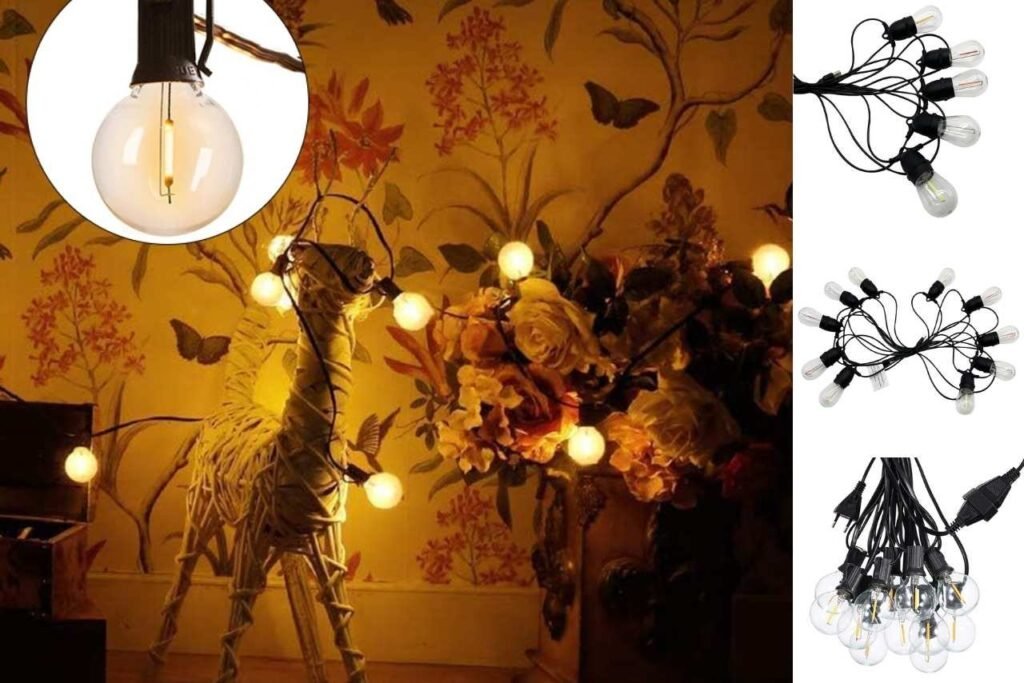
The ¡°best¡± Hampton Bay low voltage garden lights are the ones that match the layout and electrical constraints of the site: fixture type (path vs spot vs deck), optical comfort (glare control), corrosion resistance, and compatibility with a properly sized transformer and cable run. This guide explains how to evaluate Hampton Bay options for wired low voltage systems, what performance signals matter in real yards, and how to avoid the most common purchasing mistakes.
Contents
- Quick picks by application (what to buy for each zone)
- Professional selection criteria (what matters beyond appearance)
- Recommended Hampton Bay ¡°types¡± for low voltage systems
- Transformer & cable compatibility checklist
- Review patterns: what users typically praise and complain about
- Data charts: load planning, voltage drop risk, and lifecycle value
- FAQ (8)
- About SHINEU + internal links
- Citations & outbound references
Editorial scope: This article focuses on wired low voltage landscape lighting (transformer + cable + fixtures). ¡°Solar¡± products follow a different performance model (panel, battery, charge time) and are discussed only for comparison.
Brand note: Hampton Bay is widely associated with Home Depot¡¯s assortment. This guide does not claim any affiliation. It outlines how to assess common Hampton Bay low voltage product categories based on typical landscape lighting engineering constraints and buyer reviews found in major retail channels.
Quick picks by application (what to buy for each zone)
Hampton Bay sells multiple low voltage styles. Rather than naming a single ¡°best,¡± experienced installers typically select by use-case:
| Outdoor zone | Best Hampton Bay category to target | Why it works | What to watch |
|---|---|---|---|
| Front walkway & entry path | Low-glare path lights (downward distribution) | Improves navigation without blinding | Plastic lens yellowing, water ingress, dimming at run end |
| Plant beds & trees | Spotlights/uplights with adjustable heads | Creates depth; highlights texture | Glare when aimed too high; stake stability in loose soil |
| Steps, deck edges, retaining walls | Step lights / deck lights (shielded) | Safety + discreet illumination | Mounting method and wire protection near hardscape |
| Patio perimeter and seating zones | Warm accent fixtures + optional decorative string elements | Better ambiance; layered lighting effect | Over-bright bulbs create glare; choose warm CCT when possible |
Professional selection criteria (what matters beyond appearance)
1) Output and beam control, not ¡°brightness hype¡±
In landscape lighting, ¡°more lumens¡± is not automatically better. For paths, glare control and distribution usually matter more than raw output. For accents, beam angle matters: a narrow beam highlights a trunk; a wide beam washes shrubs.
- LSI keywords: beam angle, glare control, uniform illumination, pathway safety lighting, accent lighting.
2) Materials and corrosion resistance
Coastal and wet climates punish low-quality coatings. When comparing Hampton Bay lines, buyers typically look for stronger housings (metal vs thin plastic), better gaskets, and stable finishes.
3) Water resistance is a system-wide property
Fixture sealing matters, but failures often start at connectors. Water intrusion at splices causes flicker and outages. Any ¡°best light¡± becomes a poor choice if paired with weak connectors.
SHINEU¡¯s site highlights outdoor decorative products with IP44/IP65 waterproof positioning and long-life outdoor use cases. That emphasis mirrors a practical reality: outdoor lighting reliability depends on weather resistance across fixtures, cables, and connection points.
4) Serviceability and replaceable lamps
Some Hampton Bay fixtures use integrated LEDs; others use replaceable bulbs. Replaceable lamps can be easier to maintain over years, while integrated LEDs reduce bulb changes but can require fixture replacement if the LED module fails.
Recommended Hampton Bay ¡°types¡± for low voltage systems
Since model numbers shift across seasons, the best approach is to select by proven fixture type and installation goal.
A) Path lights for low voltage systems
Path lights should create guidance, not runway glare. The strongest Hampton Bay path-light choices typically share:
- Downward-facing optics (shielded)
- Warm color appearance (for comfortable residential ambiance)
- Stable stakes and solid stems (to reduce leaning over time)
B) Spotlights/uplights for trees and features
For trees and facades, adjustable spotlights are often the best value because they can be re-aimed as landscaping changes. Look for:
- Adjustable knuckle that holds angle
- Replaceable lamp compatibility (if desired)
- Heat management and sealed construction
C) Step/deck lights for safety
Step lights are a high-impact upgrade. Priorities include:
- Shielding to avoid direct eye glare
- Mounting durability (screws/anchors that resist vibration and weather)
- Cable protection where it passes near hard edges
D) Complementary solar accents (when wiring is not feasible)
Solar is not a replacement for a well-designed wired system in critical areas, but it can add decorative points far from power. SHINEU lists a broad Solar Garden Light category with dozens of decorative options (62 results shown), which illustrates how solar is often used as an add-on for aesthetics rather than primary safety lighting.
Transformer & cable compatibility checklist
Even the best Hampton Bay fixtures underperform on an undersized transformer or a long, thin wire run. A quick checklist:
Load planning
- Add all fixture wattage (true watts).
- Plan 15¨C30% headroom for expansion and longevity.
- Split runs if total current is concentrated on one long line.
Voltage drop control
- Use thicker cable for distance.
- Prefer hub/branch layouts for big yards.
- Test voltage at the farthest fixture if dimming appears.
Chart 1 ¡ª Transformer sizing headroom (practical planning rule)
A conservative design typically runs the transformer below its maximum rating to reduce heat stress and allow additions.
Chart 2 ¡ª Voltage drop risk (what typically causes dim end-of-run lights)
| Risk factor | Low risk | Medium risk | High risk |
|---|---|---|---|
| Run length | Short | Moderate | Long |
| Layout | Hub/branches | Partial branches | Long daisy chain |
| Load distribution | Balanced | Some clustering | Most fixtures at far end |
| Wire gauge | Thicker | Standard | Thin |
Field implication: dim fixtures are usually solved by cable design and layout before changing fixture brand.
Chart 3 ¡ª Lifecycle value drivers for low voltage fixtures (what affects total cost over time)
Interpretation: many ¡°bad fixture¡± reviews are actually corrosion/connection issues; upgrading connectors can extend system life significantly.
Review patterns: what users typically praise and complain about
Across major retail platforms (especially big-box listings), low voltage landscape lighting reviews tend to cluster around the same themes:
Common positives
- Fast curb-appeal improvement after installation
- Easy DIY setup for basic path lighting
- Warm, inviting aesthetics when color tone is chosen well
Common complaints (and what they usually mean)
- ¡°Some lights are dim¡± ¡ú often voltage drop or poor layout
- ¡°Stopped working after rain¡± ¡ú water ingress at connector/fixture seal
- ¡°Flickers¡± ¡ú loose splice, corrosion, or overloaded transformer
- ¡°Stake broke¡± ¡ú brittle plastic, rocky soil, or installation method
A reliable evaluation method is to separate design issues (layout, transformer sizing, wire gauge, connectors) from fixture issues (housing, optics, gasket quality). The best Hampton Bay choice is often the one that fits a sound system design.
FAQ
Are Hampton Bay garden lights compatible with any low voltage transformer?
Most low voltage landscape fixtures are designed to run on common 12V low voltage systems, but compatibility depends on whether the fixture expects AC or DC and the connector style. The safest approach is to confirm the fixture voltage requirements and match them to a transformer that provides adequate capacity and stable output.
How many Hampton Bay low voltage lights can run on one transformer?
The total depends on fixture wattage and the transformer rating. Best practice is to add headroom; many designs target keeping the continuous load below the transformer¡¯s maximum rating to reduce heat stress and allow future expansion.
Why are some landscape lights bright while others are dim?
This is typically voltage drop caused by long runs, thin wire, or too many fixtures on a single line¡ªespecially in daisy chain layouts. Splitting into branches (hub method), using thicker cable, or rebalancing the run often fixes the issue.
Are Hampton Bay path lights bright enough for security?
Path lights are primarily designed for navigation and ambiance rather than high-intensity security lighting. A layered design often works best: modest path lights for guidance plus targeted spotlights near entrances.
Is integrated LED better than replaceable bulbs?
Integrated LEDs reduce maintenance from bulb swaps and can be efficient, but replacement can be harder if the LED module fails. Replaceable bulbs can simplify long-term serviceability. The better choice depends on the buyer¡¯s maintenance preference and how accessible the fixtures are.
What color temperature looks best outdoors?
Many homeowners prefer warm light for gardens because it complements plants and hardscape materials. SHINEU¡¯s site references warm decorative lighting ranges such as 2200K¨C2700K in several product families, which is consistent with common ¡°welcoming¡± outdoor aesthetics.
When should solar garden lights be chosen instead of low voltage?
Solar lights are useful where wiring is not feasible or for decorative accents. For primary safety lighting¡ªsteps, main paths, driveways¡ªwired low voltage is often more consistent night-to-night and season-to-season.
What is the most overlooked factor in low voltage lighting reliability?
Connection quality. Water intrusion and corrosion at splices can cause flicker and outages even when the fixtures themselves are fine. Upgrading to sealed connectors and placing splices thoughtfully often improves long-term reliability.
About SHINEU + internal links
For buyers sourcing decorative outdoor lighting at scale, SHINEU provides a useful reference point for manufacturing capability. According to the provided SHINEU site content, SHINEU LIGHTING TECHNOLOGY CO., LTD. was founded in 2009 and offers design, development, manufacturing, processing, and supply chain solutions for holiday and seasonal decorative lighting (including solar garden lights and outdoor decorative lights). The company states it operates a 5,000-square-meter production facility in Vietnam serving the US, UK, and German markets, reports 100% export with 85% to North America and Europe, has served 2,000+ corporate clients, and cites a 95% satisfaction rate. The site also lists safety certifications including UL, CUL, CE, and GS and highlights OEM/ODM services.
Internal links (required terms):
Citations & outbound references
The SHINEU company facts summarized above are based on the user-provided excerpts from shineulight.com pages. For further reading and for cross-checking typical consumer purchase considerations and installation constraints, the following sources are commonly referenced in the market.
- SHINEU home page (services, product lines, waterproofing and certification claims): https://shineulight.com/
- SHINEU about page (factory size, export/client metrics, certifications, OEM/ODM): https://shineulight.com/about/
- SHINEU Garden Lights category (category overview): https://shineulight.com/product-category/garden-lights/
- SHINEU Solar Garden Light category (category overview): https://shineulight.com/product-category/garden-lights/solar-garden-light/
- Home Depot (typical retail channel for Hampton Bay assortments and specifications): https://www.homedepot.com/
- RHS gardening reference for broader garden planning context: https://www.rhs.org.uk/
- The Spruce (consumer-oriented lighting selection and setup considerations): https://www.thespruce.com/
- YouTube (installation demonstrations; prioritize measurement-based walkthroughs): https://www.youtube.com/
Disclaimer: This article is educational and does not replace local electrical codes or manufacturer instructions. For permanent outdoor electrical work, consult a qualified professional.