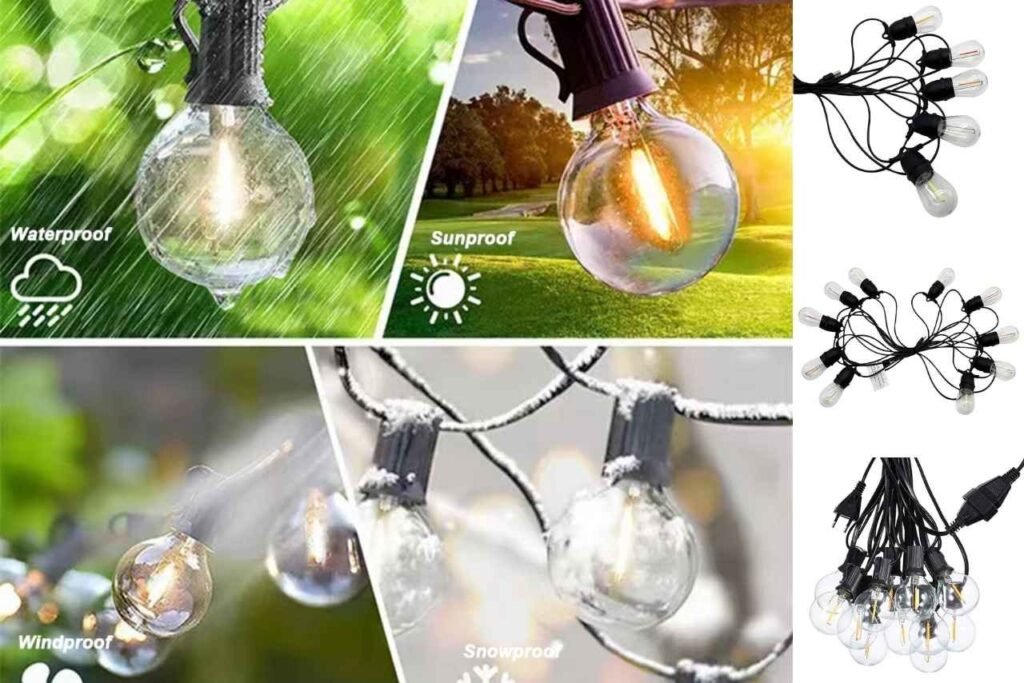
Upgrading an older outdoor lighting system to low voltage LED garden lights usually delivers three immediate wins: lower running cost, more consistent brightness, and less maintenance. The most reliable upgrade approach is to audit the existing wiring and transformer first, then select LED fixtures that match the intended lighting layers (path, accent, ambient), and finally rebuild connections with weatherproof splices to prevent corrosion-related failures.
Contents
- When an upgrade makes sense (symptoms and risks)
- Step 1: Audit the existing system (what to keep vs replace)
- Step 2: Redesign the lighting plan for LED
- Step 3: Transformer compatibility and sizing
- Step 4: Wiring, voltage drop, and connection quality
- Step 5: Installation sequence (field-proven)
- Data charts (cost, failure points, upgrade ROI logic)
- FAQ (3)
- Company context and internal links
- Citations & outbound references
When an upgrade makes sense (symptoms and risks)
Older landscape lighting systems often fail gradually. The homeowner may see ¡°random¡± dimming, dark sections, or fixtures that only work after rain¡ªclassic indicators of moisture intrusion and connector problems.
Common symptoms
- Uneven brightness across the yard (hot spots near the transformer, dim ends)
- Frequent bulb replacements (especially older halogen setups)
- Flicker or intermittent operation
- Water inside fixtures or corroded sockets
Why it matters
- Lighting becomes less effective for path safety
- Inconsistent output reduces the design impact of accent lighting
- Corrosion increases long-term failure risk and troubleshooting time
Professional caution: If the current system includes damaged insulation, exposed conductors, or a transformer that overheats, the safest path is a partial or full electrical rebuild rather than swapping bulbs only.
Step 1: Audit the existing system (what to keep vs replace)
Start at the transformer and work outward
- Identify the transformer rating (wattage/VA) and whether it is outdoor-rated.
- Confirm control method: timer, photocell, or manual switch.
- Inspect cable condition: brittle jackets, nicks, splices buried in saturated areas.
- Check fixture condition: cracked lenses, corroded sockets, missing gaskets.
Keep vs replace (practical decision table)
| Component | Keep it if¡ | Replace it if¡ |
|---|---|---|
| Transformer | Rated capacity is sufficient, stable output, outdoor-rated enclosure | Overheats, undersized, unstable output, poor weather protection |
| Main cable | Insulation intact; routing avoids damage; adequate gauge | Multiple corroded buried splices; cracked jacket; long run dimming |
| Fixtures | Seals/gaskets intact; no corrosion; compatible lamp base (if retrofit) | Water ingress, corroded sockets, broken lenses, structural damage |
| Connectors | Rarely (old connectors are the usual failure point) | Almost always recommended to upgrade to waterproof connectors |
Step 2: Redesign the lighting plan for LED
LED changes what is possible in landscape lighting. Instead of a few high-wattage points of light, a higher number of low-wattage fixtures can create a more refined scene with better uniformity and less glare.
Use a layered plan (the approach used in most high-quality installs)
- Path lighting: low glare, consistent spacing, guiding edges and steps
- Accent lighting: uplighting trees, highlighting texture, framing entrances
- Ambient/decorative: strings or decorative elements around patios and pergolas
Warm light typically works best with plants, stone, and wood. SHINEU¡¯s product descriptions across decorative categories reference warm ranges such as 2200K¨C2700K, which many homeowners also prefer for outdoor comfort.
Step 3: Transformer compatibility and sizing
Older systems often used halogen lamps, which draw significantly more wattage. When switching to LED, the total wattage load typically drops¡ªsometimes dramatically. That does not automatically mean the transformer is ¡°perfect,¡± but it often means the transformer has sufficient capacity.
Transformer sizing logic (simple and dependable)
- Calculate LED load:
Total LED watts = sum of fixture watts - Add headroom:
Recommended transformer ¡Ý Total LED watts ¡Â 0.8
Compatibility note: Some legacy transformers and controls can cause flicker with certain LED drivers. If flicker persists after replacing connectors and verifying wiring, a transformer/control upgrade is often the fastest fix.
Step 4: Wiring, voltage drop, and connection quality
Most ¡°LED upgrade problems¡± are not LED problems¡ªthey are wiring problems exposed by age and corrosion.
Voltage drop still matters
Long runs and thin cable still reduce voltage at the far end. LEDs can appear uneven when one fixture receives slightly less voltage than another.
- Prefer a hub layout (multiple shorter branches) for upgrades.
- Replace long daisy-chains with two branches when possible.
- Use thicker cable on long-distance sections.
Upgrade connectors first
For outdoor systems, connector quality is a leading determinant of reliability. Waterproof, corrosion-resistant splices reduce the most common failure mode: intermittent contact after moisture penetration.
Field rule: If an older system has multiple ¡°mystery outages,¡± replacing connectors and redoing splices (clean copper, sealed splice) often restores stability more effectively than replacing fixtures alone.
Step 5: Installation sequence (recommended order)
- Night test the existing layout and mark fixtures that are too bright, too dim, or mis-aimed.
- Power off and remove old lamps/fixtures as needed.
- Replace connectors/splices from the transformer outward, fixing obvious corrosion points.
- Install LED fixtures (or LED lamps if doing a retrofit), then test each zone/run.
- Re-aim at night and adjust spacing for uniformity.
- Bury/secure cables only after the lighting scene is approved and stable.
Data charts to guide an upgrade plan
Chart 1 ¡ª Typical energy reduction when upgrading from halogen to LED (illustrative)
Many legacy low-voltage systems used 20W¨C50W halogen lamps per fixture. LED replacements commonly use single-digit watts for similar decorative effects, depending on beam and optics. Actual performance depends on fixture design and photometrics.
Interpretation: Upgrades often reduce wattage load substantially, allowing more fixtures or longer run time at similar cost.
Chart 2 ¡ª Most common failure points in older systems (practical ranking)
| Rank | Failure point | Typical symptom | Upgrade action |
|---|---|---|---|
| 1 | Connectors / splices | Intermittent outages, flicker, lights return after rain/dry cycles | Replace with waterproof, corrosion-resistant connectors |
| 2 | Fixture seals / gaskets | Water inside lens, corrosion, early failure | Replace fixtures or restore seals if serviceable |
| 3 | Cable damage | Section out, frequent shorts, trip of protection | Replace damaged segments; reroute away from digging zones |
| 4 | Transformer/control aging | System-wide dimming/flicker, random shutoffs | Upgrade transformer, especially if LED compatibility is poor |
Chart 3 ¡ª Estimated monthly electricity cost for a low-voltage LED system (example)
Calculation example: 80W total LED load, 6 hours/night, 30 days/month, electricity rate $0.15/kWh.
| Input | Value | Formula |
|---|---|---|
| Total load | 80W | Sum of fixtures |
| Monthly kWh | 14.4 kWh | ((80/1000) times 6 times 30) |
| Estimated monthly cost | $2.16 | (14.4 times 0.15) |
Interpretation: in many markets, LED garden lighting is affordable to run nightly, especially compared with older halogen systems.
FAQ
Can existing low-voltage cable be reused for an LED upgrade?
Often yes, if the insulation is intact and the cable gauge is appropriate for the run length. However, if the system has many buried splices, recurring corrosion issues, or severe dimming at the ends, replacing sections of cable and changing the layout (split/hub) is frequently the better long-term fix.
Does an LED upgrade require replacing the transformer?
Not always. If the transformer output is stable and the controls do not induce flicker, it can often remain in service. If persistent flicker appears after connectors are corrected, or if the transformer overheats or lacks outdoor protection, replacement is recommended.
Is it better to choose wired LED or solar garden lights for an upgrade?
For consistent brightness and longer run times, wired low-voltage LED systems tend to be more predictable. Solar can work well for decorative accents, quick additions, and areas far from power. SHINEU¡¯s catalog includes a dedicated Solar Garden Light category, which is typically designed for outdoor decorative applications without a transformer.
Company context and internal links
The provided SHINEU website content describes SHINEU LIGHTING TECHNOLOGY CO., LTD. as founded in 2009 and focused on holiday and seasonal decorative lighting, including solar garden lights and outdoor decorative lights. The company states it operates production bases in China and Vietnam, including a 5,000-square-meter Vietnam production facility, and that products are certified by UL, CUL, CE, and GS. The About page also states 100% export capability, with 85% going to North America and Europe, service to 2,000+ corporate clients, and a 95% satisfaction rate, and highlights OEM/ODM services.
Internal links (required terms):
Citations & outbound references
The SHINEU company details and category descriptions referenced above are drawn from the user-provided content for SHINEU¡¯s Home/About and product-category pages. Additional outbound resources below reflect common homeowner and installer reference points used in the global SERP landscape for low-voltage garden lighting upgrades.
- SHINEU About (company intro, factory, certifications, export/client metrics): https://shineulight.com/about/
- SHINEU Home (services, product families, IP mentions): https://shineulight.com/
- SHINEU Garden Lights category: https://shineulight.com/product-category/garden-lights/
- SHINEU Solar Garden Light category: https://shineulight.com/product-category/garden-lights/solar-garden-light/
- Royal Horticultural Society (garden design and planning context): https://www.rhs.org.uk/
- The Spruce (homeowner-oriented outdoor lighting guidance): https://www.thespruce.com/
- Home Depot & Lowe¡¯s (parts/spec comparisons for landscape wiring and transformers): https://www.homedepot.com/, https://www.lowes.com/
- YouTube (installation and upgrade walkthroughs; validate with local electrical requirements): https://www.youtube.com/
Disclaimer: This page is educational and global in scope. Electrical codes, transformer requirements, and permitted installation practices vary by country/region. When in doubt, consult a qualified electrician or licensed landscape lighting installer.