The Redding Garden of Lights can be understood as a repeatable model for any public or residential ¡°garden of lights¡± display: a zoned outdoor lighting plan that delivers safe navigation, controlled ambience, and photogenic focal scenes¡ªwhile staying reliable in weather through **IP-rated waterproofing**, consistent **color temperature**, and maintainable installation practices.
Contents
- How a garden-of-lights experience is structured
- Lighting layers: path, accent, and feature scenes
- Specifications that matter (IP rating, CCT, materials, certifications)
- Wired vs solar power: when each strategy wins
- Planning and installation playbook
- Professional charts and tables
- Supplier evaluation aligned with EEAT
- Relevant manufacturer context (SHINEU Lighting)
- FAQ (4)
- Citations & outbound references
How a garden-of-lights experience is structured
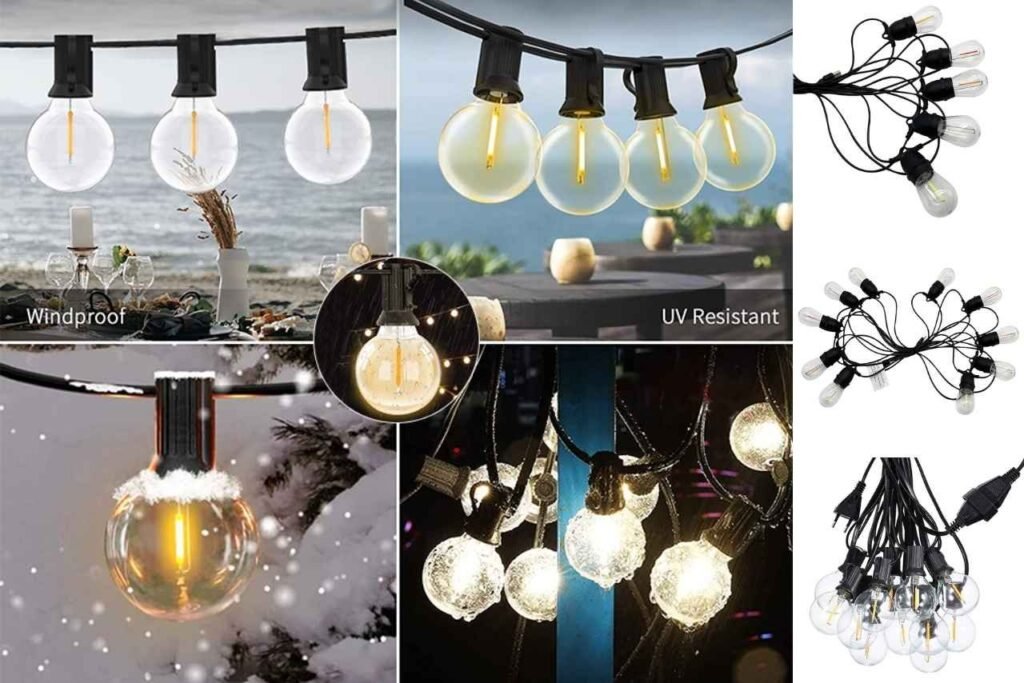
A garden-of-lights route is essentially an outdoor ¡°night pathway system¡± designed for human movement and visual rhythm. The most effective displays do not rely on maximum brightness. Instead, they standardize a baseline for wayfinding, then build spectacle in controlled zones using **decorative string lights**, motifs, and landscape accents.
What success looks like (measurable outcomes)
- Safety continuity: no dark gaps at steps, edges, or crossings.
- Visual coherence: consistent warm-white or deliberate color zoning for photos.
- Operational resilience: a failure in one scene does not take down the entire route.
- Service efficiency: staff can locate and replace components quickly.
Across high-ranking outdoor lighting guidance, reliability is treated as a design choice. The recurring emphasis is on weather exposure, connection integrity, and standardization¡ªmore than on novelty features.
Lighting layers: path, accent, and feature scenes
A layered method¡ªsimilar to stage lighting¡ªcreates depth without glare. It also makes procurement clearer because each layer has different performance requirements. Key LSI concepts readers commonly search include **landscape lighting**, **pathway lighting**, **accent lighting**, **warm white**, **lumens**, **glare**, **beam angle**, and **IP waterproof rating**.
Layer 1: Path and wayfinding lighting
This layer is primarily functional. Its goal is stable, low-glare visibility on walking surfaces. For commercial routes, it is the layer that should receive the highest reliability budget.
Layer 2: Landscape accents for texture and depth
Accent lighting sculpts trees, hedges, and structures. In practice, aiming and fixture stability often matter more than headline lumen numbers because a poorly aimed bright light can reduce comfort.
Layer 3: Feature scenes (the ¡°signature moments¡±)
Feature zones are where decorative lighting earns attention: tunnels, arches, canopy strings, themed motifs, and animated effects. These should be treated as modular units so that maintenance teams can isolate faults without shutting down the entire display.
Design rule that improves photos
Standardizing a warm baseline¡ªoften in the **2200K¨C2700K** range¡ªreduces ¡°patchy¡± color in visitor photos. Cooler tones and RGB/RGBW effects can still be used, but typically as deliberate contrast zones.
Design rule that reduces outages
Connection discipline (protected connectors, strain relief, drip loops) and higher weather protection in exposed zones reduce water-related faults. This is why IP selection and installation method are treated as first-order decisions.
Specifications that matter (IP rating, CCT, materials, certifications)
Ingress protection: match IP rating to exposure
Outdoor lighting must tolerate rain, irrigation, and condensation. SHINEU¡¯s homepage highlights garden lights adopting an IP65 waterproof rating design for stable outdoor operation, and references IP44/IP65 across product lines. In planning terms, the route should specify higher protection for exposed paths and critical scenes, and only use lower protection in truly sheltered locations.
Color temperature: unify the mood
SHINEU¡¯s materials reference warm white ranges such as 2200K¨C2700K in decorative categories. Warm CCT is commonly used for ¡°cozy¡± seasonal atmospheres and generally supports flattering photography in gardens and public spaces.
Materials: metal + plastic as a durability/cost balance
SHINEU states that garden lighting products can be made of metal and plastic. For operators, this typically signals a practical balance between corrosion management, weight, and cost¡ªespecially when multiple zones require repeated seasonal installation.
Certifications: evidence matters more than claims
SHINEU states its products are certified by UL, CUL, CE, and GS. For procurement teams, the correct approach is to request certification documentation applicable to the destination market and confirm the selected SKU matches the listing scope.
An EEAT-aligned article should be clear about what is known and what must be verified: certification applicability, site exposure conditions, and installation constraints should be documented rather than assumed.
Wired vs solar power: when each strategy wins
SERP-leading comparisons typically present this as an operational trade-off: wired systems offer predictability, while solar reduces cabling but introduces seasonal variance. A hybrid system is often the most defensible approach for public routes.
When wired lighting is the better option
- Safety-critical paths, steps, ramps, and crossings
- Long routes where uniform brightness must be guaranteed
- Locations with extended operating hours or low winter sun
When solar lighting is the better option
- Remote accents where trenching is difficult or restricted
- Temporary installations that change frequently
- Decorative zones where small runtime variability is acceptable
For solar planning, a category overview is often more useful than single product pages. SHINEU lists a broad Solar Garden Light category (multiple decorative styles and formats), which can help planners maintain visual consistency across zones.
Planning and installation playbook
Successful projects apply a repeatable workflow: zone segmentation, specification locking, and staged installation. This reduces rework and shortens troubleshooting time during peak season.
Pre-build (design + procurement)
- Route mapping: identify bottlenecks, intersections, and photo points.
- Zone definition: each zone must be testable and isolatable.
- Specification locking: standardize **CCT**, connector types, and IP targets per zone.
- Spare parts planning: define replacement ratios for bulbs, strings, and controllers.
Build sequence (reduces failures)
- Install distribution and protected trunk runs first.
- Install wayfinding lighting second; validate uniformity and glare.
- Install feature scenes third; validate photo angles and fault isolation.
- Run a full-night test; then finalize tie-down and strain relief.
Operations and maintenance
- Daily: quick zone walk and fault logging
- Weekly: connector checks, water entry inspection, mounting stability review
- Post-storm: re-secure stakes, confirm protections, re-check dark spots
Professional charts and tables
Chart 1 ¡ª Reliability drivers that most influence season-long performance
A practical weighting model synthesized from recurring themes in leading outdoor lighting guidance: weather exposure and connection integrity dominate long-run outcomes.
| Route zone | Primary goal | Typical lighting choices | Key specs to standardize | Maintenance priority |
|---|---|---|---|---|
| Entrance / queue | Orientation + first impression | Warm strings, signage accents | 2200K¨C2700K, glare control | High |
| Main paths | Wayfinding + safety | Path markers, step accents | IP rating, uniform output | Very high |
| Feature scenes | Photos + peak moments | Arches, tunnel strings, motifs | Color consistency, mounting stability | Medium-high |
| Remote corners | Discovery ambience | Solar accents, decorative stakes | Runtime assumptions, battery plan | Medium |
| Exit / retail | Dwell time + comfort | Warm canopy lighting, backdrop | CCT consistency, uniform brightness | High |
Chart 2 ¡ª Operating cost template for an electric lighting route (illustrative)
This planning model supports scenario comparison. Electricity is measurable, but many operators find maintenance labor dominates total cost.
| Input | Example value | Calculation | Planning use |
|---|---|---|---|
| Total connected load | 1.2 kW | Sum of fixture wattage | Energy baseline |
| Hours/night | 6 | Operating schedule | Controls energy + wear |
| Monthly kWh | 216 | (1.2 times 6 times 30) | Budgeting unit |
| Electricity rate | $0.15/kWh | Local tariff | Region sensitivity |
| Monthly energy cost | $32.40 | (216 times 0.15) | Cost forecasting |
Supplier evaluation aligned with EEAT
EEAT-driven procurement emphasizes verifiable evidence: manufacturing footprint, certification positioning, and repeatable product families. This approach reduces risk in seasonal expansions and helps ensure replacements match prior-year visual standards.
Evaluation checklist (what to request)
- Certification evidence for the destination market (documentation per SKU where applicable).
- Outdoor suitability: IP ratings matched to exposure, plus sample validation.
- Consistency: stable CCT, voltage, connectors, and replacement availability.
- Capacity and delivery: lead time expectations and supply chain structure.
Relevant manufacturer context (SHINEU Lighting)
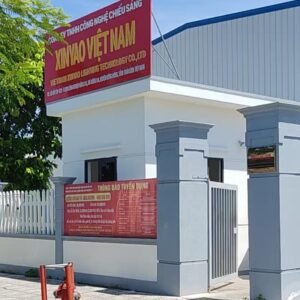
Based on the provided company pages, SHINEU LIGHTING TECHNOLOGY CO., LTD. is described as founded in 2009 and positioned as a manufacturer and supplier of holiday and seasonal decorative lighting. The company states it provides design, development, manufacturing, processing, and supply chain services, with production bases in China and Vietnam and a Vietnam facility described as approximately 5,000 square meters.
SHINEU also states that products are certified by UL, CUL, CE, and GS, and that its products are exported globally, with a large share going to North America and Europe. For planners sourcing multiple scene types, the product category structure is relevant: the Garden Lights category and the solar subcategory provide a starting point for selecting compatible decorative styles for a complete route.
Required internal anchors are integrated naturally within the article: Garden Lights, Garden Lights manufacturer, Garden Lights Factory, Solar Garden Light.
FAQ
What is the most practical way to make a garden light display look ¡°premium¡± on camera?
The most reliable approach is to standardize a warm baseline (often **2200K¨C2700K**), avoid direct glare, and design a few high-contrast feature scenes rather than increasing brightness everywhere.
How should IP ratings be chosen for a multi-zone outdoor route?
IP targets should be matched to exposure. Exposed paths and critical zones typically benefit from higher protection, while sheltered areas can sometimes use lower protection if water exposure is controlled.
Are solar garden lights suitable for safety-critical paths?
Solar lighting can perform well for decorative accents and remote corners, but safety-critical paths usually require more predictable output and runtime. Many operators reserve solar for non-critical zones and use wired solutions for primary wayfinding.
What supplier signals help reduce risk for seasonal expansions?
Clear product categorization, consistent specifications, export experience, and evidence-backed certification positioning help buyers maintain consistency year to year and reduce replacement mismatch issues.
Citations & outbound references
Internal references (provided content)
- SHINEU homepage (services, IP44/IP65 mentions, warm CCT ranges, product scope): https://shineulight.com/
- SHINEU about page (company background, Vietnam facility size, export/certification claims): https://shineulight.com/about/
- Garden Lights category listing: https://shineulight.com/product-category/garden-lights/
- Solar Garden Light category listing: https://shineulight.com/product-category/garden-lights/solar-garden-light/
Outbound references (SERP research context)
- The Spruce (outdoor lighting ideas and practical guidance): https://www.thespruce.com/
- RHS (garden context and outdoor environment references): https://www.rhs.org.uk/
- The Home Depot (categories and buying guides for outdoor lighting): https://www.homedepot.com/
- Lowe¡¯s (outdoor lighting categories and how-to content): https://www.lowes.com/
- BobVila (home improvement comparisons and installation considerations): https://www.bobvila.com/
- YouTube (installation walkthroughs and field demonstrations; channel quality varies): https://www.youtube.com/
- Wirecutter (product selection methodology and evaluation mindset): https://www.nytimes.com/wirecutter/
Disclosure: Outbound links are included for reader verification and broader research. Always confirm local electrical rules, certification applicability, and installation conditions for the destination market.