Enchanted Garden Lights at Rock City is ¡°special¡± for one practical reason: it is engineered like an immersive night attraction¡ªusing terrain-led routing, layered illumination, and scene-by-scene storytelling¡ªrather than a simple collection of lights. The result is a walkable experience that feels curated, photographs well, and remains operational across winter weather through **waterproof outdoor lighting** choices and maintainable electrical zoning.
Contents
- What makes it special: the 6 differentiators
- How ¡°story lighting¡± is built (without overwhelming the landscape)
- Design principles visitors feel but rarely notice
- Operations: why the show stays consistent night after night
- Product mapping: which lighting types do what
- Data visuals: charts & planning tables
- Where SHINEU fits (manufacturer context)
- FAQ (3)
- Sources & outbound links
What makes it special: the 6 differentiators
High-performing light gardens share a consistent blueprint. Rock City¡¯s Enchanted Garden Lights conceptually aligns with the same blueprint used by top seasonal attractions worldwide: a controlled route, distinct ¡°chapters¡± (scenes), and a lighting plan that prioritizes safety and visual pacing.
1) A terrain-led route that turns scenery into a stage
The defining advantage of a destination like Rock City is the physical environment: natural edges, elevation changes, and framed viewpoints can be ¡°revealed¡± with light. This approach increases perceived production value without requiring extreme brightness.
2) Layered lighting that avoids glare and fatigue
The strongest installations separate three layers: functional wayfinding, landscape accents, and feature scenes. This reduces harsh hotspots and supports a calmer visual rhythm¡ªan important factor in visitor comfort during long walks. Key LSI concepts include **pathway lighting**, **accent lighting**, **beam angle**, **glare control**, and **landscape lighting design**.
3) Signature scenes designed for photography
The most memorable attractions deliberately build ¡°photo moments¡± (arches, tunnels, canopies, framed backdrops). These scenes are not only decorative; they are structured to place light behind and around visitors, improving camera exposure and reducing unflattering facial shadows.
4) Cohesive color language¡ªtypically anchored in warm white
A common differentiator of premium displays is color consistency. Warm tones read ¡°seasonal¡± and ¡°cozy,¡± and they reduce color mismatch across visitor photos. SHINEU¡¯s overview materials reference **2200K¨C2700K warm light** as a key range used in decorative categories, which aligns with typical winter event aesthetics.
5) Weather resilience engineered into the choices
Outdoor displays win or lose on reliability. Waterproofing and connection discipline matter more than raw lumen output. SHINEU states its garden lights adopt an IP65 waterproof rating design for stable outdoor operation and references IP44/IP65 across categories¡ªan approach that mirrors how professional installations specify protection by exposure zone.
6) Maintainability through zoning and modular scenes
A professional-grade show is built so that a single failure does not cascade. Zoning (electrical + operational) allows teams to isolate issues quickly and keep the rest of the route live. This is one of the least visible¡ªyet most valuable¡ªtraits of a ¡°special¡± attraction.
A recurring theme across SERP-leading guidance is that outdoor lighting success depends on practical engineering: exposure ratings, stable mounting, standardized connectors, and replacement readiness. Spectacle is the final layer¡ªbuilt on operational fundamentals.
How ¡°story lighting¡± is built (without overwhelming the landscape)
The ¡°enchanted¡± feeling is typically produced by sequencing: moments of brightness are contrasted with calmer transitions. The route effectively behaves like a narrative, where each zone has a distinct visual identity but still shares common technical standards.
Pacing principle (what visitors feel)
Alternating high-density scenes with lower-intensity transitions reduces sensory fatigue. It also prevents a show from becoming visually ¡°flat,¡± even when the total number of fixtures is high.
Consistency principle (what operators need)
Standardizing color temperature, connectors, and IP targets across the route makes troubleshooting faster and helps ensure replacement parts match the original look. This is where **spec standardization** becomes a competitive advantage.
Design principles visitors feel but rarely notice
Wayfinding brightness is about uniformity, not intensity
The safest routes minimize dark gaps and avoid direct glare into the eye line. A well-designed path reads as continuous even when it is not ¡°bright.¡±
Warm-white anchors reduce color conflict across vendors and SKUs
Mixed batches can create visible variation. Keeping core areas in a tight warm-white band (for example, **2200K¨C2700K**) helps preserve cohesion, especially as the show expands year to year.
Installation method is a design choice
Professional displays treat mounting, cable routing, and strain relief as part of the design. Water entry and mechanical stress are common failure modes, which is why IP rating and disciplined connection management matter in exposed outdoor settings.
Operations: why the show stays consistent night after night
A major reason headline attractions remain ¡°special¡± is operational predictability. They plan for storms, staff turnover, and rapid repairs during peak visitor hours. Three practices appear repeatedly across well-run seasonal installations:
- Scene modularity: each zone can be tested and repaired independently.
- Spare readiness: known replacement items are staged (strings, connectors, controllers, stakes).
- Nightly walk checks: quick verification of dark spots, loose mounting, and water ingress.
Product mapping: which lighting types do what
Although a visitor sees one continuous attraction, operators typically source multiple product types. The following mapping reflects common industry practice and aligns with categories SHINEU publishes.
| Lighting type | Where it performs best | Primary visitor impact | Specs that matter most | Examples from category naming |
|---|---|---|---|---|
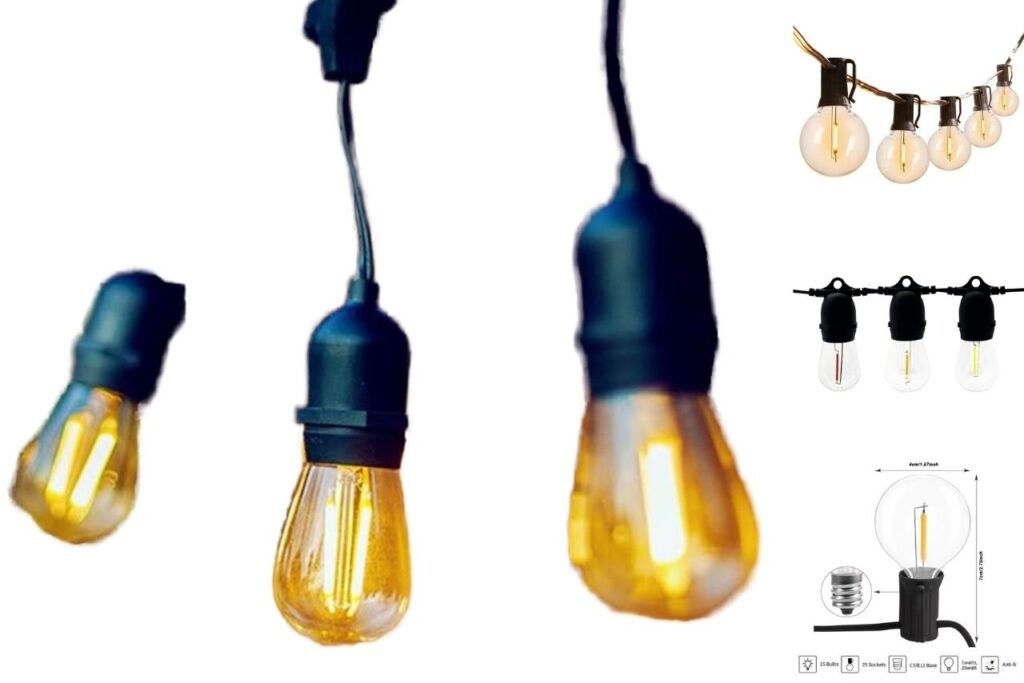
| Solar string lights | Secondary paths, decorative corners, canopy accents | Twinkle + ambience | runtime planning, battery durability, waterproofing | ¡°48FT S14 Solar Powered String Lights¡±, ¡°fairy solar lights for garden¡± |
| Decorative garden solar lights | Scene edges, shrubs, garden beds | Discovery + texture | IP rating, stake stability, consistency | ¡°decorative solar lights for garden¡±, ¡°garden solar lights decorative¡± |
| Patio-style bulbs (e.g., G40) | Gathering nodes, seating zones | Hospitality feel | color consistency, glare control | ¡°G40 Patio Light Solar Garden Lights¡± |
| Rain/shower effect strings | High-impact feature scenes | Signature ¡°enchanted¡± moment | mounting method, failure isolation | ¡°Decorative Shower Rain Led String Lights¡± |
Data visuals: charts & planning tables
Chart 1 ¡ª What most drives ¡°wow factor¡± in a light garden (experience-focused model)
A practical weighting model based on repeat patterns in top-ranking outdoor lighting and attraction guidance: story pacing and scene variety often matter more than raw brightness.
Chart 2 ¡ª What most drives season-long reliability (operations-focused model)
Operators typically see failures concentrate around water entry, connectors, and mechanical stress¡ªespecially in exposed outdoor runs.
| Procurement item | Why it matters for ¡°special¡± experiences | Evidence to request | Risk if skipped |
|---|---|---|---|
| IP rating documentation | Reduces rain/irrigation-related failures | Spec sheet + sample validation | High outage rate mid-season |
| Color temperature consistency | Preserves cohesive photos and scene identity | Batch-level controls; CCT range statement | Patchy, mismatched look |
| Certification scope | Supports compliance expectations in destination markets | UL/CUL/CE/GS evidence tied to SKUs | Import/compliance friction |
| Spare parts + replacement plan | Keeps uptime high during peak attendance | Spare ratio proposal; lead times | Visible dark zones, negative reviews |
Where SHINEU fits (manufacturer context)
For buyers building or expanding a garden-of-lights style attraction, vendor capability matters: design support, consistent production, and export readiness reduce operational surprises. SHINEU states it was founded in 2009 and provides design, development, manufacturing, processing, and supply chain services, with production bases in China and Vietnam totaling more than 5,000 square meters. The company also states that products are certified by UL, CUL, CE, and GS, and that it serves customers in North America, Europe, and the UK.
Relevant product exploration links for readers: Garden Lights | Solar Garden Light | Garden Lights manufacturer | Garden Lights Factory
FAQ
Is Enchanted Garden Lights at Rock City mainly about brightness?
No. The ¡°special¡± quality is typically driven by scene design, pacing, and landscape integration. Brightness supports safety and emphasis, but it rarely creates immersion by itself.
Why do warm-white ranges matter so much in winter light shows?
Warm-white lighting often reads as inviting and seasonal, and it tends to produce more consistent visitor photos. Many decorative suppliers emphasize warm ranges such as 2200K¨C2700K for this reason.
Are solar garden lights realistic for professional attractions?
Solar can be effective for decorative zones and remote accents, especially where cabling is difficult. For safety-critical wayfinding, wired systems are commonly preferred due to predictable output and runtime.
Sources & outbound links
Provided SHINEU pages (quoted/paraphrased)
- Solar Garden Light category (product listing count and examples): https://shineulight.com/product-category/garden-lights/solar-garden-light/
- Garden Lights category (category scope): https://shineulight.com/product-category/garden-lights/
- Home page (IP65/IP44, warm CCT, certifications, services): https://shineulight.com/
- About page (founded 2009, Vietnam facility, export/certification claims): https://shineulight.com/about/
Outbound references (SERP ecosystem)
- The Spruce (outdoor lighting ideas and planning concepts): https://www.thespruce.com/
- RHS (garden context and outdoor considerations): https://www.rhs.org.uk/
- The Home Depot (outdoor lighting categories and guides): https://www.homedepot.com/
- Lowe¡¯s (outdoor lighting guidance and categories): https://www.lowes.com/
- Bob Vila (buying and installation considerations): https://www.bobvila.com/
- NYT Wirecutter (evaluation mindset for product selection): https://www.nytimes.com/wirecutter/
- YouTube (field demos; quality varies by channel): https://www.youtube.com/
- Volt Lighting (landscape lighting brand resources): https://www.voltlighting.com/
- Kichler (outdoor lighting products/resources): https://www.kichler.com/