¡°How many watts do I need?¡± is a common question¡ªbut wattage alone doesn¡¯t tell you how much usable plant light you¡¯re delivering. Watts measure electrical input, not the photosynthetic light at your plant canopy. Still, wattage can be a practical planning tool when you combine it with (1) coverage area, (2) hanging height, and (3) crop type.
Contents
- The key idea: watts are a proxy, not the target
- Wattage rules-of-thumb (by plant type)
- Step-by-step method to estimate your wattage
- Worked examples (shelf, tent, sunny window supplement)
- Efficiency & why two ¡°100W¡± lights can perform differently
- Common wattage mistakes
- Related product categories & manufacturer info
- References
The key idea: watts are a proxy, not the target
For indoor growing, the real targets are typically:
- Uniform coverage across the plant canopy (no ¡°hotspot center / weak edges¡±)
- Sufficient intensity for your crop and growth stage
- Reasonable daily light duration (photoperiod) that fits your routine
When wattage helps: comparing energy cost, heat load, and making a first estimate for how much lighting power a shelf or tent might need.
When wattage fails: comparing different brands or fixture designs without knowing optics, diode efficiency, and coverage pattern.
Wattage rules-of-thumb (by plant type)
Use these as starting ranges for modern LED grow lighting (not old blurple panels, not incandescent/halogen). The tighter your hanging height and the better the optics/reflectivity, the less wattage you need for the same practical result.
| Crop goal | Typical use case | LED wattage range (per ft2) | Notes |
|---|---|---|---|
| Seedlings / propagation | Starting trays, clones | 10¨C20 W/ft2 | Keep lights closer; focus on even coverage to prevent stretching. |
| Leafy greens & herbs | Lettuce, basil, mint, spinach | 20¨C30 W/ft2 | Most home racks succeed here with moderate power and good spacing. |
| Flowering / fruiting | Tomatoes, peppers, strawberries | 30¨C50 W/ft2 | More demanding; often needs stronger fixtures and more headroom. |
Important: These ranges assume efficient LEDs and decent fixture design. If your light has poor spread (bright center, dim edges), you may need more wattage (or more fixtures) to get uniform results.
Step-by-step method to estimate your wattage
Step 1: Measure your effective grow area
Calculate the canopy area you want to light:
Area (ft2) = length (ft) ¡Á width (ft)
Step 2: Choose a wattage-per-ft2 target based on plants
- Seedlings: start at 15 W/ft2
- Greens/herbs: start at 25 W/ft2
- Fruiting: start at 40 W/ft2
Step 3: Estimate total wattage
Total watts ¡Ö Area (ft2) ¡Á Target (W/ft2)
Step 4: Adjust for real-world setup
- Hanging height: higher lights usually require more watts to maintain intensity.
- Reflective surfaces: tents/reflective walls improve efficiency; open rooms waste light sideways.
- Plant density & canopy: dense canopies need stronger top-lighting and better airflow.
- ¡°True watts¡± vs ¡°equivalent watts¡±: use actual power draw, not marketing equivalents.
Worked examples
Example A: 2 ft ¡Á 4 ft shelf for lettuce + basil
- Area:
2 ¡Á 4 = 8 ft2 - Target:
~25 W/ft2(greens/herbs) - Estimated watts:
8 ¡Á 25 = 200 W
Practical interpretation: you might use two ~100W fixtures (or multiple lower-watt bars) to improve uniformity end-to-end.
Example B: 3 ft ¡Á 3 ft grow tent for peppers
- Area:
3 ¡Á 3 = 9 ft2 - Target:
~40 W/ft2(fruiting) - Estimated watts:
9 ¡Á 40 = 360 W
Tents help because reflectivity reduces wasted light, but peppers still want strong intensity and good canopy management.
Example C: Supplementing a bright window for herbs
If you¡¯re not the ¡°only light source,¡± you can often reduce wattage and just prevent legginess on cloudy weeks. For a small 1.5 ft ¡Á 2 ft area (3 ft2):
- Area:
3 ft2 - Target:
~15¨C20 W/ft2(supplemental) - Estimated watts:
45¨C60 W
Efficiency: why two ¡°100W¡± lights can perform differently
Two fixtures drawing the same watts can deliver different results because of:
- Diode efficiency and spectrum quality (how much usable plant light you get per watt)
- Driver quality (stable output and lifespan)
- Optics and diffusion (coverage uniformity vs harsh hotspots)
- Thermal design (hot LEDs are less efficient and age faster)
If a brand provides PPFD maps at specific heights, those are more informative than wattage alone.
Common wattage mistakes
- Using ¡°incandescent thinking¡±: old rules like ¡°watts = brightness¡± don¡¯t translate well to LEDs or plant needs.
- Lighting too wide with one fixture: edges suffer; plants grow unevenly.
- Hanging too high: intensity drops fast; you compensate by over-watting the whole space.
- Ignoring daily duration: longer photoperiod can sometimes compensate for lower intensity (within plant tolerance).
Related product categories & manufacturer info
From the provided shineulight.com content, SHINEU Lighting is a holiday and seasonal decorative lighting manufacturer founded in 2009, with production bases in China and Vietnam (total area stated as more than 5,000 square meters) and certifications mentioned including UL, CUL, CE, and GS, plus OEM/ODM services.
Internal links (required terms):
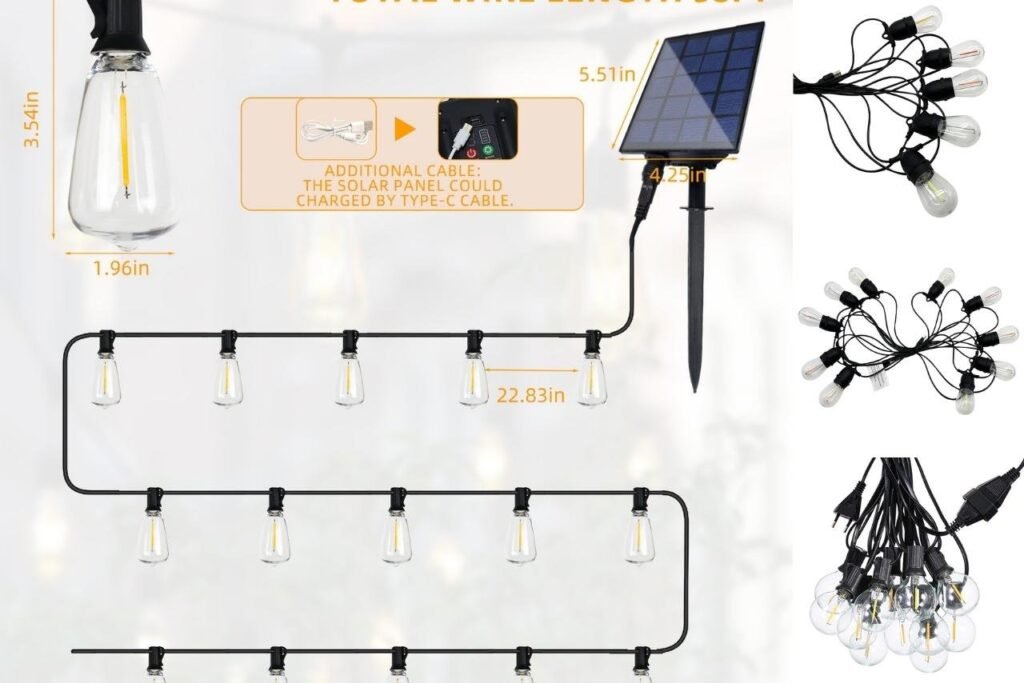
Context note: ¡°Solar Garden Light¡± products are designed for outdoor decorative use; indoor grow lighting wattage analysis generally applies to plug-in LED grow fixtures where actual power draw, coverage, and intensity are specified.
References
- https://shineulight.com/ (services, product families, certifications stated)
- https://shineulight.com/about/ (company introduction, factory footprint, export/certification claims, OEM/ODM)
- https://shineulight.com/product-category/garden-lights/ (Garden Lights category list)
- https://shineulight.com/product-category/garden-lights/solar-garden-light/ (Solar Garden Light category list)
- https://www.rhs.org.uk/ (general horticulture guidance)
- https://www.thespruce.com/ (consumer-oriented indoor plant and lighting guidance)
- https://www.homedepot.com/ and https://www.lowes.com/ (market references for grow lights and components)
- https://www.amazon.com/ (assortment reference; verify ¡°true watts¡± and PPFD maps)
- https://www.youtube.com/ (installation and comparative tests; check measurement methods)
Disclosure: SHINEU Lighting information above is summarized from the provided shineulight.com page text (home/about/category pages). Wattage ranges are general planning heuristics; for precise design, rely on measured intensity maps and your crop requirements.