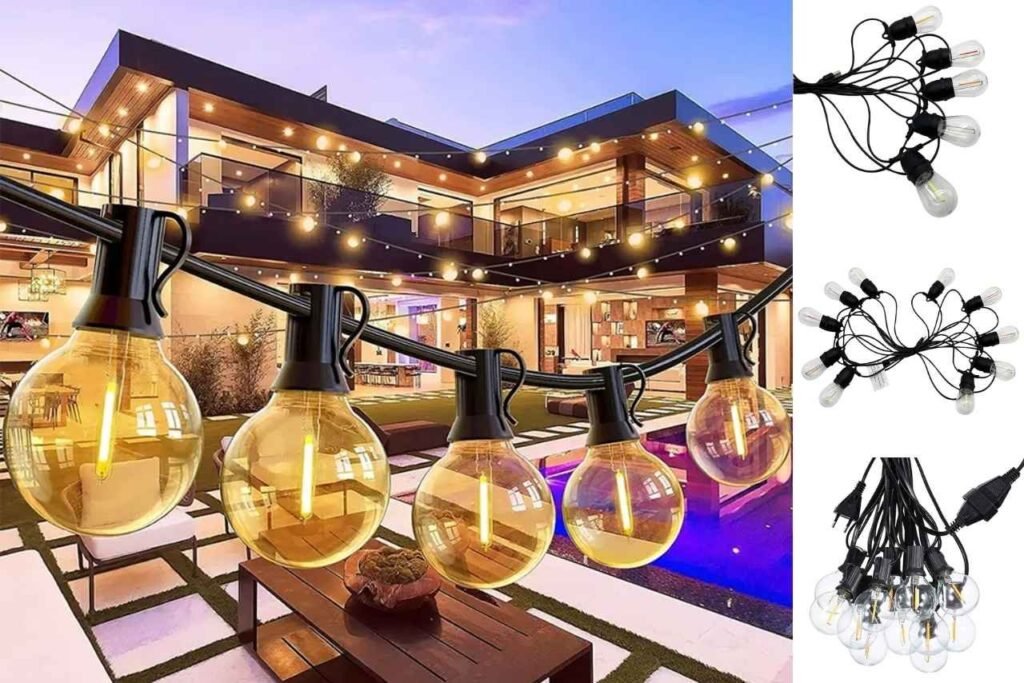
Most low voltage garden lighting failures are not caused by the fixtures themselves¡ªthey come from avoidable wiring mistakes: undersized transformers, long daisy-chain runs that create voltage drop, poor-quality connectors that corrode, and layouts that make future maintenance difficult. This guide identifies the wiring errors that most often lead to dim lights, intermittent outages, and early component failure, and it provides clear corrective actions that align with practical field installation practices.
In this article
Fast diagnostic checklist (5 minutes)
- Check the transformer load: compare total fixture watts to transformer rating (leave headroom).
- Look for the ¡°bright start / dim end¡± pattern: classic sign of voltage drop.
- Inspect connectors: loose or corroded taps are the #1 cause of intermittent failures.
- Verify cable routing: long single runs and thin cable increase dimming.
- Confirm timer/photocell behavior: some ¡°wiring issues¡± are actually control settings.
The most common wiring mistakes (and how to avoid them)
Mistake 1: Choosing a transformer with no capacity margin
A transformer sized exactly to the total load may run hotter and leave no room for expansion. In real yards, owners almost always add lights later (a new path, new planting bed, seasonal decor).
- Best practice: size with headroom and plan for growth.
- Why it matters: overload can cause shutdowns, flicker, or shortened transformer life.
Mistake 2: Using a long daisy chain for everything
A single long run is convenient, but it concentrates load and distance into one cable path. The result is often uneven brightness: fixtures near the transformer look correct while far fixtures look weak.
- Better layouts: hub method (multiple shorter branches) or loop method where applicable.
- LSI terms to know: cable topology, branch circuits, load balancing.
Mistake 3: Ignoring cable gauge vs. run length
Cable resistance increases with length. If the cable is too thin for the distance and wattage, the last fixtures receive lower voltage and dim.
Field symptom: brightness improves when the far fixture is temporarily moved closer to the transformer. That confirms a wiring/run issue, not a defective light.
Mistake 4: Burying cable before testing the full system at night
In many DIY installs, the cable gets buried after a quick daytime test. Later, at night, the homeowner notices glare, uneven spacing, or dimming¡ªand now every change requires re-digging.
- Correct process: place fixtures, connect, test, aim at night, then bury.
Mistake 5: Relying on cheap ¡°pierce¡± connectors in wet soil
Low voltage systems often fail at connectors, not fixtures. Quick-tap connectors can loosen, corrode, or create high-resistance contact points¡ªespecially in climates with frequent rain, irrigation, or freeze-thaw cycles.
- Better option: sealed, weather-rated connectors (commonly gel-filled types).
- Maintenance clue: if lights flicker when the cable is moved, suspect the splice.
Mistake 6: Poor strain relief and no service loops
Tight wiring makes future repairs harder and increases failure risk when soil settles or gardeners pull on cables accidentally.
- Best practice: leave a small service loop near fixtures and junctions.
- Why it matters: reduces tension on terminals and connectors.
Mistake 7: Splicing in low points where water pools
Even ¡°waterproof¡± connections last longer when they are not submerged in saturated soil for long periods.
- Fix: relocate splices slightly higher, or add drainage and protective housings where needed.
Mistake 8: Mixing fixture wattages without re-checking total load per run
Homeowners often upgrade a few heads to brighter lamps, then wonder why the far end dims or the transformer trips. Small changes add up.
- Fix: track a simple load table by run and re-balance branches if upgrades are made.
Mistake 9: Not labeling runs, junctions, and zones
When a fault happens, unlabeled wiring turns a 10-minute diagnosis into a weekend. A clean zone plan also supports seasonal or ¡°scene¡± lighting.
- Best practice: label transformer outputs, runs, and key junction points.
Mistake 10: Treating ¡°IP rating¡± as a complete weatherproofing strategy
Fixture ratings help, but outdoor reliability depends on the entire system: transformer placement, cable routing, connector sealing, and water management. SHINEU¡¯s website content highlights IP-rated designs (IP44/IP65) across several decorative lines, which is a useful cue for what to evaluate¡ªyet the wiring system still requires best-practice installation.
Data charts (what typically fails first)
Chart 1 ¡ª Wiring mistake risk ranking (likelihood ¡Á impact)
Interpretation: most troubleshooting time is spent at splices and topology decisions, not at the luminaires.
Chart 2 ¡ª Voltage drop: symptoms mapped to likely wiring causes
| Symptom observed at night | Most likely wiring cause | Fast confirmation test | Corrective action |
|---|---|---|---|
| End fixtures noticeably dim | Long run / thin cable / too many fixtures on one branch | Measure voltage at first and last fixture with a multimeter | Split into branches; use thicker cable; loop/hub layout |
| Only one zone dims when others are fine | Overloaded branch or poor splice on that branch | Bypass the suspect splice temporarily | Re-splice with sealed connector; rebalance load |
| All fixtures pulse/flicker | Loose main connection or transformer fault | Check transformer output terminals and line plug | Re-terminate; replace failing transformer if needed |
Chart 3 ¡ª Typical cost impact of wiring mistakes (time + materials)
Costs vary by market; this table reflects the practical reality that rework (digging, re-splicing, replacing cable) often costs more than upgrading connectors or cable gauge during initial installation.
| Mistake | What usually happens | Rework profile | Prevention strategy |
|---|---|---|---|
| Cheap connectors | Intermittent outages, corrosion | High labor (find fault + re-splice) | Use sealed, outdoor-rated splices from day one |
| Undersized cable | Persistent dimming far from transformer | High labor (replace runs) | Plan topology and gauge for distance/load |
| No night test before burial | Glare, poor aiming, uneven spacing | Medium¨Chigh labor (re-dig, move fixtures) | Full night test + aiming pass before burial |
How to fix a bad install without starting over
Prioritize the highest-probability failure points
- Reconnect/replace splices first (especially any that are loose, wet, or corroded).
- Split the longest run into two shorter branches.
- Upgrade cable gauge only where needed (often just the ¡°spine¡± from transformer to hub).
- Re-aim and re-space after electrical issues are stabilized.
If a transformer is overheating, repeatedly shutting down, or wiring insulation is damaged, the system should be powered off until repaired. Local electrical requirements vary; professional assistance may be necessary.
FAQ (7)
Why are low voltage garden lights dim at the end of the run?
The most common cause is voltage drop from long cable distance, thin cable gauge, or too many fixtures on one branch. Splitting the run into branches (hub layout) and improving cable gauge on the main feed typically resolves the issue.
Is it acceptable to use quick-tap connectors outdoors?
Quick taps can work in ideal conditions, but many reliability issues come from corrosion or loosened contact over time. Sealed, weather-rated connectors generally perform better for long-term outdoor use, especially in wet soil or irrigated beds.
Should cable be buried before testing?
No. The system should be fully connected, tested for uniform brightness, and aimed at night before burial. This reduces rework and prevents ¡°buried mistakes.¡±
How much spare capacity should a transformer have?
A transformer should not be selected with zero margin. Capacity headroom supports stable operation and allows for additional fixtures later. The exact margin depends on the transformer design and installation environment.
Why do lights flicker when the cable is moved?
This strongly indicates a poor splice or loose connection creating intermittent contact. The fix is to re-terminate the connector using a sealed outdoor-rated splice and ensure conductors are clean and fully seated.
Do IP ratings guarantee that wiring connections are safe from water?
IP ratings describe enclosure protection. They do not automatically protect splices, transformer connections, or installation-specific weak points. Waterproof system reliability requires proper connector selection, placement, and cable routing.
Can low voltage garden lights share wiring with solar garden lights?
Solar products are typically self-contained (panel + battery + light) and do not share low voltage transformer wiring. A mixed approach is common: low voltage for primary paths/steps and solar for decorative accents or areas far from power.
Internal resources & manufacturer context
Based on the provided content from shineulight.com, SHINEU LIGHTING TECHNOLOGY CO., LTD. was founded in 2009 and positions itself as a manufacturer and supplier of holiday and seasonal decorative lighting. The company states it provides design, development, manufacturing, processing, and supply chain services; operates production bases in China and Vietnam (including a 5,000 m2 Vietnam facility); exports 100% of products with 85% going to North America and Europe; serves 2,000+ corporate clients; and reports a 95% satisfaction rate. The site also mentions certifications including UL, CUL, CE, and GS and OEM/ODM services.
Internal links (required terms)
Sources & outbound links
The company and catalog statements in this article are based on the user-provided text from SHINEU¡¯s site pages. The wiring guidance reflects common landscape-lighting installation practices used across major retailer guides and professional installer education. For further reading, the following external references are useful for cross-checking installation steps, component selection, and safety practices.
- SHINEU About (factory info, certifications, export stats): https://shineulight.com/about/
- SHINEU Home (services, IP44/IP65 mentions, product families): https://shineulight.com/
- SHINEU Garden Lights category: https://shineulight.com/product-category/garden-lights/
- SHINEU Solar Garden Light category: https://shineulight.com/product-category/garden-lights/solar-garden-light/
- RHS (general garden planning context): https://www.rhs.org.uk/
- Home Depot (landscape lighting parts and installation guidance): https://www.homedepot.com/
- Lowe¡¯s (landscape lighting transformers, cable, fixtures): https://www.lowes.com/
- The Spruce (homeowner-friendly landscape lighting tips): https://www.thespruce.com/
- YouTube (installation demonstrations; validate against local code): https://www.youtube.com/
Disclaimer: This content is educational and does not replace manufacturer instructions or local electrical code requirements.