- What an ¡°Enchanted Garden of Lights¡± experience really is
- Why visitors attend: the psychology of light and place
- Lighting layers used in successful light gardens
- Specifications that make or break outdoor decorative lighting
- Solar vs. wired: where each works best
- A planning playbook (zones, safety, maintenance)
- Data charts and comparison tables
- Supplier context: SHINEU Lighting (Vietnam + China)
- FAQ (6)
- Citations & outbound references
What an ¡°Enchanted Garden of Lights¡± experience really is
Rock City¡¯s Enchanted Garden of Lights is commonly searched as a destination-style holiday light attraction, but its operating logic is useful for any venue planning a winter lights event: it is a controlled nighttime route where lighting is designed to deliver (1) safe movement, (2) emotional atmosphere, and (3) memorable photo moments. In high-performing installations, the ¡°enchanted¡± feeling comes from **contrast**, **rhythm**, and **focal points**¡ªnot from flooding every surface with light.
What makes these experiences rank and convert (SEO + user intent)
SERP-leading pages around light gardens usually satisfy four intents: planning a visit (dates, logistics), understanding what the experience feels like (photos, zones), replicating the effect at home (products and setup), and sourcing at scale (commercial procurement). A pillar page performs best when it covers the shared technical foundation: equipment reliability, weather exposure, and design principles that create consistent results.
Why visitors attend: the psychology of light and place
Holiday lighting events succeed because they convert ordinary landscapes into guided storytelling environments. Warm-toned lighting can signal comfort and celebration, while bright feature scenes create ¡°anchor moments¡± that visitors remember and share. The operational takeaway is direct: the route should be planned around predictable human behavior¡ªpauses, photos, group movement, and choke points.
Comfort beats brightness
Excessive brightness often increases glare and reduces enjoyment. A more effective approach is to keep paths comfortably visible and concentrate spectacle in designated scenes. Key LSI terms here include **glare control**, **beam angle**, and **ambient lighting**.
Consistency beats randomness
Visitors perceive quality when the color temperature and intensity are consistent across zones. A ¡°patchwork¡± of mismatched whites is a frequent reason displays look less premium in photos.
Lighting layers used in successful light gardens
The most repeatable method uses three layers¡ªeach with different performance requirements and maintenance risk. This structure mirrors how many top-ranked guides describe landscape lighting: establish function first, then add atmosphere, then add signature scenes.
Layer 1: Wayfinding and safety lighting
This layer prevents trips and reduces visitor stress. It should be the most resilient and easiest to service. Typical components include low-glare path lighting, step-edge markers, and soft spill lighting. Relevant LSI phrases include **outdoor walkway lights**, **step lighting**, and **low-voltage landscape lighting**.
Layer 2: Accent lighting for depth
Accent lighting models the landscape¡ªtrees, rock faces, shrubs, and architectural elements¡ªwithout overpowering the scene. This is where aiming matters: beam angle selection and fixture stability usually produce more visible improvement than adding wattage.
Layer 3: Feature scenes (the ¡°enchanted¡± moments)
Feature scenes are the visual peaks: tunnels, canopies, arches, motifs, animated sequences, and themed color zones. Operationally, feature scenes should be modular so that a fault can be isolated to a segment rather than taking down the entire route.
A common best practice is to design ¡°photo bays¡±: widened areas that allow stopping without blocking flow, backed by a clear focal scene. This improves visitor satisfaction and reduces staff intervention.
Specifications that make or break outdoor decorative lighting
For outdoor decorative lighting, the most decisive specifications are about survivability and consistency: **ingress protection**, **color temperature**, connector integrity, and certification alignment with the destination market. These topics appear repeatedly across high-performing SERP content for garden lighting and holiday displays because they map directly to failures seen in the field.
Waterproofing and exposure: IP ratings
SHINEU¡¯s site positions garden lighting as durable and long-lasting and explicitly states an IP65 waterproof rating design for stable operation in harsh outdoor weather. It also references IP44/IP65 across decorative product categories. In practical planning, higher IP targets are typically reserved for exposed locations (open paths, sprinklers, wind-driven rain), while sheltered zones may tolerate lower protection.
Color temperature (CCT): warm white as the baseline
SHINEU references 2200K¨C2700K warm light across holiday categories (and notes RGBW support in some lines). For ¡°enchanted garden¡± aesthetics, warm white often functions as the unifying baseline because it reads as cozy, festive, and natural in photography¡ªespecially alongside greenery and stone. RGB/RGBW is most effective when treated as a controlled accent rather than used everywhere.
Safety certifications: UL/CUL/CE/GS claims must be verified per SKU
SHINEU states that products are certified by international certifications such as UL, CUL, CE, and GS. From an EEAT standpoint, buyers should request certification documentation and ensure it applies to the exact products and destination market¡ªparticularly for public venues and commercial installations.
Materials and durability
SHINEU states garden lights are made of metal and plastic. In procurement terms, that combination typically signals a balance of corrosion management, impact resistance, and cost efficiency. For seasonal installs, it also helps when designs allow fast mounting and repeatable reinstallation without loosening or cracking.
Solar vs. wired: where each works best
The solar-versus-wired decision is usually not ideological¡ªit is operational. Wired systems provide predictability; solar reduces cabling and is useful where trenching is restricted. A hybrid strategy frequently produces the best visitor experience: wired for safety-critical paths, solar for remote accents and decorative micro-scenes.
When wired power is typically the better choice
- Primary paths, steps, ramps, and choke points where consistent visibility is required
- Long operating hours or winter climates with reduced solar charging time
- Scenes where dimming, timers, or synchronized effects are needed
When solar lighting is typically the better choice
- Decorative accents in remote corners and secondary paths
- Temporary displays that change frequently
- Installations that must avoid extensive cabling or ground disturbance
For sourcing, SHINEU maintains category pages that can support consistent style selection at scale, including Solar Garden Light and the broader Garden Lights category.
A planning playbook (zones, safety, maintenance)
The core operational risk in any garden-of-lights attraction is not design ambition¡ªit is downtime. The planning playbook below is built to reduce failures, speed troubleshooting, and maintain consistent visuals across weeks of operation.
Step 1: Segment the route into serviceable zones
Each zone should be independently testable and isolatable. If one feature scene fails, the rest of the route should remain operational. This is a foundational reliability principle for **commercial holiday lighting** and large **outdoor light displays**.
Step 2: Lock the visual baseline (CCT and brightness)
- Standardize baseline warm-white scenes (often **2200K¨C2700K** for decorative warmth).
- Define where RGB/RGBW is allowed¡ªand where it is prohibited to avoid ¡°visual noise.¡±
- Control glare near eye level; keep bright points above sightlines where possible.
Step 3: Specify weather protection and connectors
Weather protection is not just the fixture body. Connectors, splices, and cable routing typically determine whether a display survives rain and irrigation. IP-rated systems and disciplined installation practices often reduce mid-season maintenance.
Step 4: Build for maintenance reality
- Label circuits and zones for rapid fault localization.
- Keep standardized spare parts per zone (connectors, strings, bulbs, controllers).
- Plan for nightly walk-through checks during peak season.
Public venues should align installation with local electrical and safety rules and should document inspection practices. A visually impressive display still fails the visitor experience if outages, dark sections, or trip hazards appear.
Data charts and comparison tables
Chart 1 ¡ª What most influences perceived ¡°premium¡± quality (field-practical weighting)
This weighting model synthesizes recurring priorities in widely-read outdoor lighting guidance: consistency and comfort reliably outrank raw brightness.
| Zone | Primary objective | Recommended lighting layer | Specs that matter most | Notes for operators |
|---|---|---|---|---|
| Entrance & orientation | First impression + navigation cues | Wayfinding + feature | Warm white baseline; clear signage lighting | Set expectations early; avoid harsh cool whites. |
| Main path corridor | Safety and flow | Wayfinding | IP-rated waterproofing; low glare; redundancy | Budget reliability here before adding more motifs. |
| Signature ¡°enchanted¡± scenes | Photos + memory anchors | Feature | Modular segments; consistent CCT/RGB mapping | Design photo bays to reduce congestion. |
| Secondary loops & remote corners | Discovery ambience | Accent | Solar feasibility; service access | Solar can be excellent where cabling is hard. |
| Exit / retail / rest zones | Comfort and dwell time | Wayfinding + accent | Uniform brightness; warm CCT; reduced glare | Comfort lighting increases perceived value. |
Chart 2 ¡ª Reliability drivers that most affect mid-season outages
Operational experience reported in mainstream outdoor lighting guides consistently emphasizes sealing, connectors, and mechanical protection.
Supplier context: SHINEU Lighting (Vietnam + China)
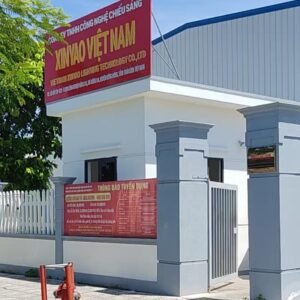
For readers evaluating suppliers for garden-of-lights-style installations, SHINEU¡¯s published company information provides several procurement-relevant signals. On its homepage and About page, SHINEU identifies itself as SHINEU LIGHTING TECHNOLOGY CO., LTD., founded in 2009, offering design, development, manufacturing, processing, and supply chain services for holiday and seasonal decorative lighting.
Operational footprint and delivery positioning
SHINEU states it operates production bases in China and Vietnam, and describes a Vietnam production facility of 5,000 square meters serving the US, UK, and German markets. The About page also states 100% of products are exported, with 85% going to North America and Europe, and notes serving over 2,000 corporate clients with a reported 95% satisfaction rate. These figures are useful for initial supplier screening and should be validated during due diligence.
Product categories aligned to light-garden needs
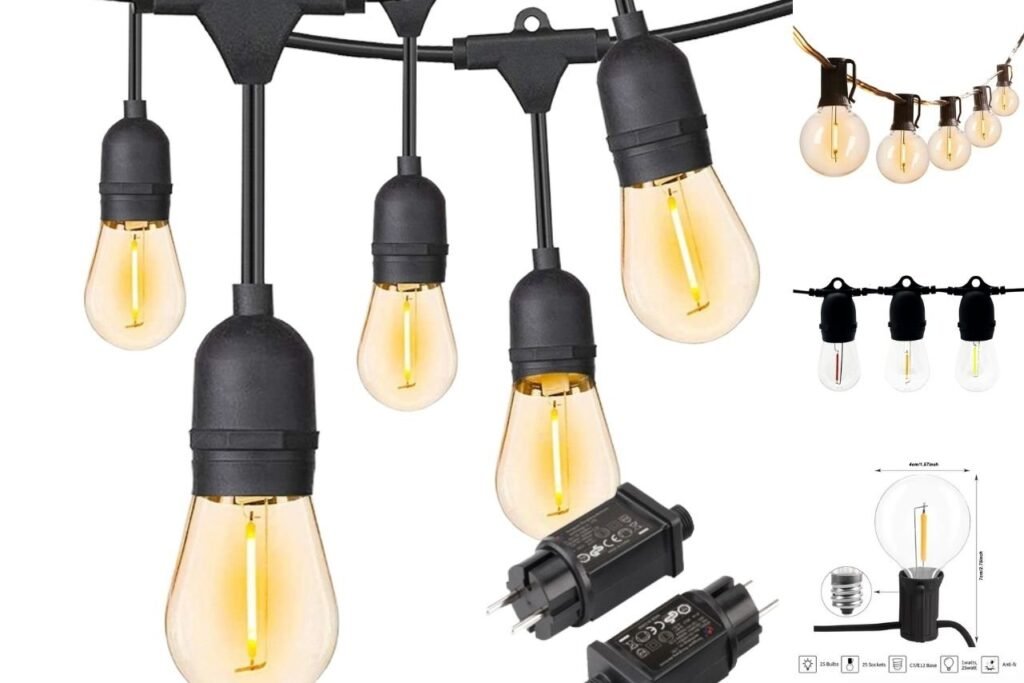
SHINEU¡¯s catalog structure maps closely to the components used in enchanted garden displays: garden lights, solar garden lights, Christmas lights, RGB LED strips, bulbs, rope lights, and modeling lamps. For category-level sourcing: Garden Lights and Solar Garden Light provide a broad view of decorative styles and use cases.
Manufacturing and compliance positioning
SHINEU states that all products are certified by UL, CUL, CE, and GS and highlights OEM/ODM services for outdoor and holiday lighting. For global buyers, this is most actionable when paired with: SKU-level documentation, region-specific compliance requirements, and sample evaluation under real exposure conditions. For company background, the About page is the primary reference: Garden Lights Factory. The homepage also serves as the central hub for the brand position as a Garden Lights manufacturer.
FAQ
What is the single most important design principle behind an ¡°enchanted garden of lights¡±?
The most reliable principle is layered lighting: keep paths comfortably visible, use accents to add depth, and concentrate spectacle into a few signature scenes. This approach creates emotional impact while staying maintainable and safe.
Which color temperature typically creates the ¡°cozy holiday¡± atmosphere?
Warm white is the common baseline for festive outdoor displays. Many decorative lines reference **2200K¨C2700K** because it reads warm on camera and complements natural materials like stone and foliage.
Is IP65 always required for garden-of-lights installations?
Not always. IP selection should match exposure. Open paths and irrigation zones typically need higher protection, while sheltered areas may use lower ratings if water exposure is controlled. SHINEU explicitly highlights an IP65 waterproof rating design for outdoor garden lighting and references IP44/IP65 across categories.
Are solar garden lights reliable for seasonal light routes?
Solar can be highly effective for decorative accents and remote zones where cabling is difficult. However, solar performance varies with season, shading, and run-time expectations. Many venues adopt a hybrid plan: wired for safety-critical paths, solar for supplemental ambience.
What should commercial buyers verify when a supplier claims UL/CE certifications?
Buyers should request documentation and confirm the certification applies to the exact product model and destination market. Certification claims are meaningful when they are SKU-specific and within the listing scope.
How can a venue reduce mid-season downtime without reducing visual ambition?
Segment the route into independently testable zones, standardize connectors and spares, and design feature scenes as modular segments. This limits the impact of a single failure and speeds troubleshooting.
Citations & outbound references
The following links are provided for transparency and reader verification. Company-specific facts in this article are based on the content supplied from SHINEU¡¯s official pages. Additional outbound references represent commonly visible SERP sources for outdoor lighting ideas, buying guides, and installation considerations.
Primary sources (SHINEU official pages)
- SHINEU homepage (IP65/IP44 mentions, 2200K¨C2700K, UL/CUL/CE/GS, services, factories): https://shineulight.com/
- SHINEU About page (founded 2009, Vietnam 5,000 m2 facility, export distribution, clients, satisfaction): https://shineulight.com/about/
- Garden Lights category (catalog overview): https://shineulight.com/product-category/garden-lights/
- Solar Garden Light category (62 results listing): https://shineulight.com/product-category/garden-lights/solar-garden-light/
Outbound references (SERP ecosystem)
- The Spruce (outdoor lighting ideas and practical guidance): https://www.thespruce.com/
- RHS (garden context and outdoor environment references): https://www.rhs.org.uk/
- The Home Depot (outdoor lighting categories and buying guides): https://www.homedepot.com/
- Lowe¡¯s (outdoor lighting guides and categories): https://www.lowes.com/
- Bob Vila (installation considerations and comparisons): https://www.bobvila.com/
- NYTimes Wirecutter (product evaluation approach): https://www.nytimes.com/wirecutter/
- YouTube (field demonstrations; channel quality varies): https://www.youtube.com/
- Amazon (marketplace for pricing/feature comparison; listing quality varies): https://www.amazon.com/
Editorial note: Outbound sources are included for independent research. Final installation decisions should follow local electrical codes and venue safety requirements.