For many homeowners, a Solar Garden Light appears to be a simple, self-contained marvel: it sits in the sun all day and glows all night without a single wire. However, beneath its minimalist “Apple-style” exterior lies a complex DC independent photovoltaic system that manages light harvesting, chemical energy storage, and automated switching in real-time. Understanding how do solar powered outdoor garden lights actually work requires a dive into the four critical subsystems: the photovoltaic generator, the electrochemical storage unit, the intelligent controller, and the high-efficacy LED engine.
As a leading Garden Lights manufacturer, ShineU Lighting (Huizhou Xinyao Lighting Technology) has spent over 15 years perfecting these subsystems within our Garden Lights Factory. By integrating monocrystalline silicon panels and LiFePO4 batteries, we have moved solar performance from “decorative accent” to “architectural reliability”. This guide explains the technical orchestration that allows our solar series to provide a 6 to 8-hour nightly work time with zero grid reliance.
Step 1: The Photovoltaic Effect ¨C Harvesting the Sun
The process begins at the solar panel, which is a collection of monocrystalline or polycrystalline silicon cells. When photons (light particles) strike these cells, they excite electrons in the silicon, creating a flow of direct current (DC) electricity. This is known as the photovoltaic effect.
- Efficiency Metrics: Premium Solar Garden Light models in 2026 utilize monocrystalline panels with a 22% conversion rate, meaning they harvest more energy in less surface area than cheaper alternatives.
- Low-Light Harvesting: Modern panels are treated with anti-reflective coatings to capture UV rays even on overcast days, a critical feature for gardens in northern climates.
Step 2: Energy Storage ¨C The Electrochemical Reservoir
Because the sun does not shine at night, the electricity generated must be stored. The current enters the rechargeable battery, where it is converted into chemical energy. The “heart” of a 2026 professional light is the Lithium Iron Phosphate (LiFePO4) battery.
| Component | Function | Professional Standard (ShineU) |
|---|---|---|
| Solar Panel | Photons to DC Power | High-Grade Monocrystalline |
| Storage Battery | Energy Reservoir | LiFePO4 (3,000+ Cycles) |
| Control Circuit | The “Brain” | Smart EMS & Dusk Sensor |
| LED Engine | Light Emission | High-Lumen / Low Heat |
LiFePO4 technology allows for deep discharging (80-100% Depth of Discharge) without damaging the battery, a significant upgrade over older Ni-MH cells. This allows our Garden Lights to maintain consistent brightness until the very end of their discharge cycle.
Step 3: The Intelligent Controller ¨C Automation and Protection
The control circuitry acts as the system’s brain. It performs three vital tasks:
- Charge Management: It prevents the solar panel from overcharging the battery during peak summer sun and prevents deep discharge, which would shorten the system’s life.
- Dusk-to-Dawn Detection: A built-in photoresistor (photocell) monitors ambient light levels. When the voltage from the solar panel drops below a certain threshold at sunset, the controller switches the circuit to “discharge” mode, activating the LEDs.
- Hybrid Management: In ShineU¡¯s USB & Solar Hybrid models, the controller intelligently switches between solar energy and USB-charged reserves to ensure the light never goes out during a week of rain.
Step 4: LED Illumination ¨C Efficient Nighttime Output
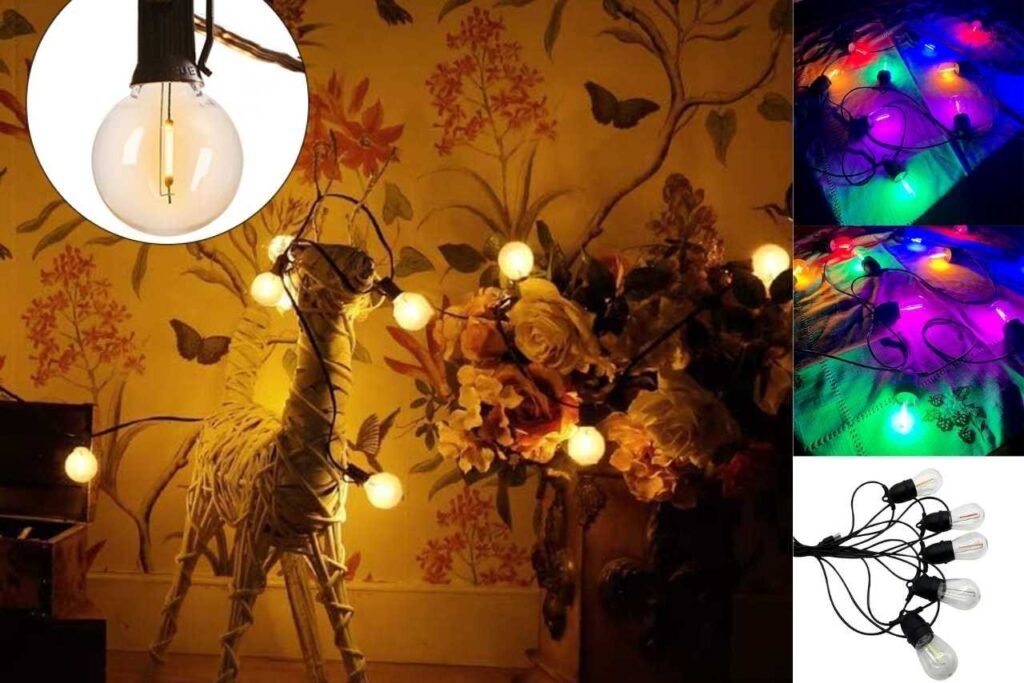
When the controller activates, the stored chemical energy is converted back into electricity to power the LED (Light Emitting Diode) bulbs. Modern LEDs are 90% more efficient than traditional bulbs, generating almost zero heat. For example, our S14 and G40 string series operate at a safe 3V-4.5V range, providing a warm 2200K-2700K color temperature that mimics the glow of incandescent gas lamps with only a fraction of the power consumption.
Technical Operation FAQ
1. Why do I need to charge my solar lights for 1-2 days before the first use?
This is called battery conditioning. Keeping the light OFF for the first 24-48 hours of sun exposure allows the battery to reach a full 100% capacity without the nightly discharge interruption, setting the foundation for a longer lifespan.
2. Do solar lights work under artificial light?
Yes. Solar panels harvest photons, which are present in incandescent and high-intensity LED indoor lighting. However, the charging speed is much slower than direct sunlight.
3. What happens to the energy if the light is switched “OFF”?
The panel continues to collect energy and charge the battery. The switch only controls whether that energy is released to the LEDs at night.
4. How does the “Breath” mode work in your string lights?
The controller uses Pulse Width Modulation (PWM) to rapidly pulse the power to the LEDs, creating a rhythmic fading effect without wasting extra energy.