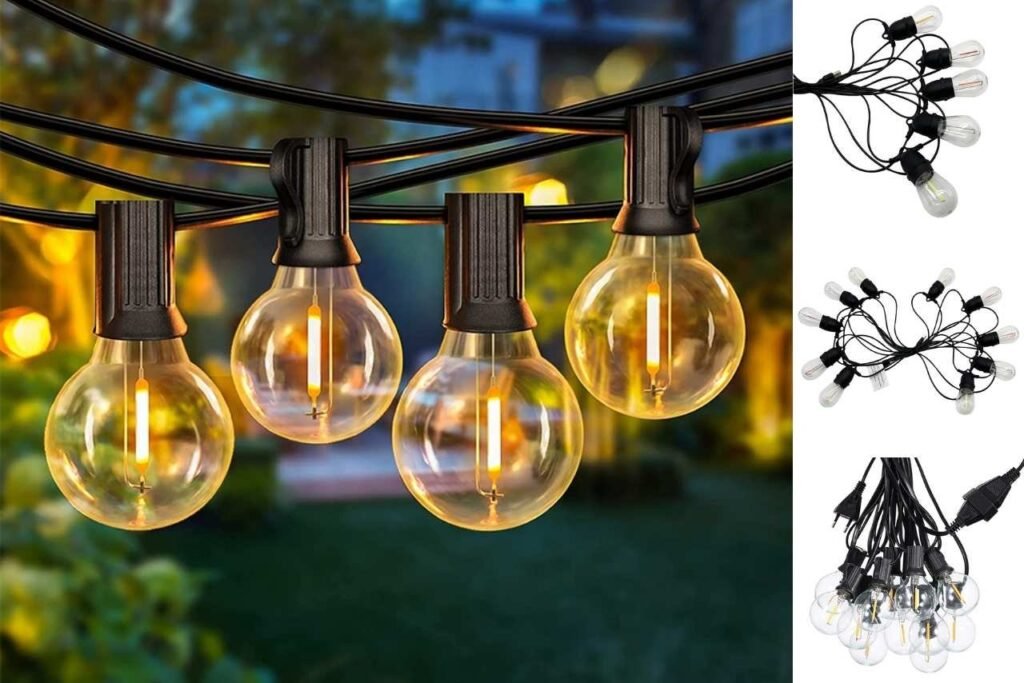
A low voltage transformer is the ¡°power plant¡± for most wired landscape lighting systems. Choose the right one and your garden lights run safely, consistently, and at the brightness you expect. Choose the wrong one and you¡¯ll fight dim fixtures, flicker, premature failures, and overloaded circuits.
Contents
- What a low voltage transformer does
- Step 1: Calculate your total lighting load (watts/amps)
- Step 2: Add headroom (why ¡°just enough¡± is a bad idea)
- Step 3: Plan for voltage drop (wire length & gauge)
- Step 4: Select features (timer, photocell, zones, dimming)
- Step 5: Installation & safety checklist
- Quick sizing examples
- Related SHINEU pages (internal links)
- References
What a low voltage transformer does
Most wired landscape lighting is ¡°low voltage,¡± typically 12V AC (and sometimes 12V DC depending on the system). The transformer:
- Converts household power to low voltage suitable for outdoor fixtures
- Provides a rated maximum output (commonly shown as watts/VA)
- Often includes automation (timer/photocell) and circuit protection
Important distinction: Many Solar Garden Light products don¡¯t use a transformer at all because they are self-powered by a solar panel and battery. Transformers apply to wired low-voltage systems.
Step 1: Calculate your total lighting load (watts/amps)
Start with the nameplate wattage of each fixture (or bulb). Add them up.
Total watts:
Total W = W1 + W2 + ... + Wn
If a fixture lists amps at 12V instead of watts:
Watts ¡Ö Volts ¡Á Amps
Example: a 12V fixture drawing 0.25A uses about 12 ¡Á 0.25 = 3W.
Use ¡°actual watts,¡± not marketing equivalents. Some products show ¡°replaces 35W¡± style claims¡ªthose are not the electrical load.
Step 2: Add headroom (why ¡°just enough¡± is a bad idea)
Transformers run cooler and last longer when they¡¯re not pushed at 100% capacity. A common planning rule is to size the transformer so your expected load uses about 70¨C85% of its rating.
- If your total load is 120W, a 150W¨C200W transformer is often a better choice than 120W/135W.
- Headroom also supports future expansion (adding pathway lights later).
Simple sizing formula:
Transformer rating ¡Ý Total W ¡Â 0.8 (adds ~25% headroom)
Step 3: Plan for voltage drop (wire length & gauge)
Voltage drop is the #1 reason garden lights look dim at the far end of the run.
What causes voltage drop?
- Long cable runs
- Thin wire (higher resistance)
- High total current on a single run
How to reduce it (practical fixes)
- Use thicker cable for longer distances (lower gauge number = thicker wire).
- Split into multiple runs/zones instead of one long daisy chain.
- Use a hub method (multiple shorter branches) for better uniformity.
- Consider multi-tap transformers (12V/13V/14V/15V taps) to compensate for distance.
Tip: If only the last few lights are dim, it¡¯s usually a wire length/gauge/run design issue¡ªnot transformer wattage.
Step 4: Select features that match how you use your yard
| Feature | Why it matters | Best for |
|---|---|---|
| Timer | Predictable on/off schedule | Daily pathway and patio lighting |
| Photocell (dusk-to-dawn) | Automatic seasonal adjustment | Security + convenience |
| Multiple zones/outputs | Separate control of areas (front yard vs backyard) | Mixed lighting scenes |
| Multi-tap output | Helps compensate voltage drop on long runs | Large yards / long driveways |
| Dimming compatibility | Set mood lighting and reduce glare | Patios, entertaining spaces |
Step 5: Installation & safety checklist
- Outdoor rating: ensure the transformer is listed for outdoor installation.
- Mounting location: keep it ventilated and protected from direct sprinklers.
- GFCI protection: use a GFCI-protected outlet/circuit where required.
- Do not exceed rating: total connected load should stay within the transformer¡¯s specified capacity.
- Use proper connectors: weatherproof splices prevent corrosion-related flicker.
Quick sizing examples
Example 1: Small pathway run
You have 10 path lights at 4W each.
- Total load:
10 ¡Á 4W = 40W - Recommended transformer:
40 ¡Â 0.8 ¡Ö 50W¡ú choose a 60W class unit
Example 2: Mixed garden + accent lighting
You have 8 path lights (4W) + 6 spotlights (7W).
- Total load:
(8 ¡Á 4) + (6 ¡Á 7) = 32 + 42 = 74W - Recommended transformer:
74 ¡Â 0.8 ¡Ö 93W¡ú choose 100W¨C150W
If the run is long, prioritize thicker cable or split runs before upsizing the transformer.
Example 3: Expanding later
You¡¯re at 120W today and plan to add ~40W later.
- Future load:
160W - Suggested transformer:
160 ¡Â 0.8 = 200W¡ú choose 200W¨C300W depending on run layout
Related SHINEU pages (internal links)
Based on the provided SHINEU content: SHINEU LIGHTING TECHNOLOGY CO., LTD. (founded in 2009) is a manufacturer and supplier of holiday and seasonal decorative lighting. The site highlights a 5,000 m2 Vietnam production facility, export focus (stated as 100% export with 85% to North America and Europe), and product certifications including UL, CUL, CE, and GS, along with OEM/ODM services.
Internal links (required terms):
Reminder: solar products typically do not require a low-voltage transformer; this article applies to wired low-voltage garden lighting systems.
References
- https://shineulight.com/ (services, product categories, certifications mentioned)
- https://shineulight.com/about/ (company introduction, Vietnam factory size, export and client metrics, certifications, OEM/ODM)
- https://shineulight.com/product-category/garden-lights/ (Garden Lights category listing)
- https://shineulight.com/product-category/garden-lights/solar-garden-light/ (Solar Garden Light category listing)
- https://www.homedepot.com/ and https://www.lowes.com/ (transformer/wire sizing examples and specs¡ªverify per model)
- https://www.rhs.org.uk/ (general garden planning)
- https://www.thespruce.com/ (consumer-oriented outdoor lighting tips)
- https://www.youtube.com/ (installation walkthroughs; confirm electrical compliance locally)
Disclaimer: Electrical standards vary by country/region. Follow local codes and the transformer/fixture manufacturer¡¯s installation instructions.