Choosing between LED and fluorescent grow lights for an indoor garden requires an analysis of Photosynthetic Photon Efficacy (PPE), thermal output, and spectral precision. In 2026, the definitive advantage lies with Light Emitting Diodes (LEDs) due to their ability to provide a customizable full-spectrum output with up to 50% less energy consumption than high-output fluorescent (T5) systems. While fluorescents offer a lower initial capital expenditure, LEDs provide superior long-term ROI through extended 50,000-hour lifespans and higher Photosynthetically Active Radiation (PAR) delivery per watt. Selecting the appropriate technology depends on balancing the specific light saturation points of your cultivars with the environmental constraints of your indoor grow space.
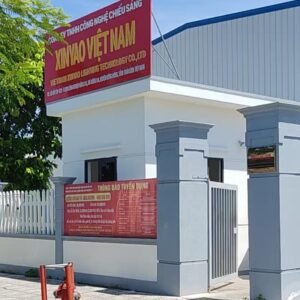
As a premier Garden Lights manufacturer, ShineU Lighting (Huizhou Xinyao Lighting Technology Co., Ltd.) has spent over 15 years engineering high-efficacy illumination. Operating from our ISO9001-certified Garden Lights Factory, we produce safety-certified systems (UL, CE, GS) that leverage high-efficiency SMD LED chips and monocrystalline silicon panels for hybrid applications. While our Solar Garden Light series leads the market in outdoor sustainability, the core electrical architecture of our 3V-4.5V low-voltage DC systems serves as the technical benchmark for safe, high-performance indoor grow hubs. This guide provides a technical comparison between LED and fluorescent technologies to assist in professional hardware procurement.
Luminous Efficiency and PPE: The Core Metric
The primary differentiator in the LED vs. Fluorescent debate is how efficiently each source converts electricity into photons usable by plants. PPE (Photosynthetic Photon Efficacy) measures this conversion in micromoles per joule (¦Ìmol/J). Modern LED grow lights consistently achieve PPE ratings above 2.5 ¦Ìmol/J, whereas the most efficient T5 fluorescent tubes typically plateau around 1.2 to 1.5 ¦Ìmol/J.
- Directional Light Output: LEDs are inherently directional, focusing 100% of their photon flux toward the plant canopy. Fluorescents emit light in 360 degrees, requiring heavy reflectors that inevitably lead to 20-30% light loss via scattering.
- Spectral Tuning: LEDs allow manufacturers to “dial in” specific wavelengths. Our 2026 grow series prioritizes 450nm (blue) and 660nm (red) peaks to maximize chlorophyll absorption, a feat fluorescents can only approximate using chemical phosphors.
- Photon Density: For high-light indoor herbs or flowers, LEDs provide the high-intensity PPFD (Photosynthetic Photon Flux Density) necessary for biomass production without the bulk of massive fluorescent fixtures.
Thermal Management and Plant Safety
Thermal radiation is a critical factor in indoor garden health. Fluorescent lights generate significant heat on the surface of the bulb, which can lead to “leaf burn” if the plants grow too close. In contrast, ShineU Lighting systems utilize injection molding with thermally conductive polymers and aluminum heat sinks to draw heat away from the LEDs and the plants.
| Feature | LED Grow Light (ShineU Standard) | Fluorescent (T5 HO) |
|---|---|---|
| Operating Life | 50,000+ Hours | 10,000 ¨C 20,000 Hours |
| Heat Emission | Very Low (Radiated backward) | Moderate/High (Radiated toward plants) |
| Voltage Safety | 3V-4.5V DC Low Voltage | High Voltage AC Ballast |
| Maintenance | Zero (No bulb changes) | Annual bulb replacement required |
Environmental Resilience and IP Ratings
Indoor gardens are inherently high-moisture environments. The electrical ballasts of fluorescent fixtures are susceptible to moisture ingress, which can lead to humming or total failure. By contrast, our Garden Lights heritage means every grow fixture is designed with IP44 to IP65 waterproofing in mind. Using 3V-4.5V low-voltage DC power reduces the risk of electrical shorting during misting or accidental water contact, making LEDs the safer choice for home and commercial indoor nurseries.
Furthermore, for growers seeking 100% off-grid or emergency redundancy, our USB & Solar Hybrid integration is only possible with LED technology. Fluorescents require too much startup current to be powered effectively by LiFePO4 batteries or monocrystalline solar panels. LEDs allow for 6 to 8-hour nightly work times even when running on stored battery power, providing a level of autonomy that fluorescents cannot match.
Manufacturing and Global Supply Standards
When procuring grow lights for global distribution, manufacturing scale and compliance are the ultimate trust signals. ShineU Lighting operates 5,000 square meter production facilities in both China and Vietnam, specializing in ODM, OEM, and OBM solutions for the US, UK, and German markets. This geographic footprint ensures that our products meet localized safety certifications like UL and CE while avoiding the logistical bottlenecks of single-origin manufacturing. Every Solar Garden Light and indoor grow hub we produce is subjected to automated inspection to ensure the ISO 9001:2015 standard is strictly maintained.
Grow Light Technology FAQ
1. Can I switch the bulbs in my fluorescent fixture to LED?
Yes, “LED retrofits” exist for T5 fixtures. However, these are often less efficient than purpose-built LED arrays because the fixture’s reflector is still designed for 360-degree fluorescent output, leading to significant photon waste.
2. Do LEDs really save money if they cost more upfront?
Absolutely. When you factor in the lower energy consumption (up to 50% savings) and the elimination of annual bulb replacements (which cost roughly $10-$20 per tube), a professional LED system typically pays for itself within the first 12-18 months of operation.
3. Are fluorescent lights better for seedlings?
Traditionally, fluorescents were preferred because they provide a soft, non-intense light. However, modern LEDs with dimming controllers or adjustable height stands can replicate this “soft” output while providing a more precise spectral mix for better root development.
4. Why does ShineU prioritize 2200K-2700K color temperatures?
Warm amber tones (2200K-2700K) are essential for triggering flowering cycles and enhancing the production of resins and essential oils in many herb species, mimicking the “late summer” solar spectrum.
Expert References & Technical Sources
- ShineU Lighting (Huizhou Xinyao): 15-Year Manufacturing Excellence and ISO9001 Compliance
- U.S. Department of Energy: Evaluating Efficacy in Modern LED and Fluorescent Systems
- Royal Horticultural Society (RHS): Light Requirements for Indoor Culinary Cultivation
- The Spruce: Cost-Benefit Analysis of Indoor Garden Illumination Technologies