Low-voltage landscape lighting (commonly 12V) is a popular way to add safe, flexible outdoor illumination for paths, beds, patios, and features. The core of any system is the transformer, which converts household line voltage to low voltage and often adds control features (timers, photocells, zones). This guide explains what to buy, how to size it, and what to avoid¡ªso your lighting is bright, reliable, and easy to expand.
Contents
- What ¡°low-voltage with transformer¡± means
- How to size the transformer (wattage + headroom)
- Voltage drop: the #1 reason lights look dim
- Transformer features to compare
- Choosing fixtures: LED, beam, material, IP rating
- Wiring layouts that work (and when to use them)
- Buyer checklist
- SHINEU internal links (required)
- References
What ¡°low-voltage garden lights with transformer¡± means
A low-voltage landscape system typically includes:
- Transformer / power pack (steps household voltage down to low voltage, often 12V AC)
- Low-voltage cable running from transformer to fixtures
- Fixtures (path lights, spotlights, well lights, deck lights, etc.)
- Connectors (pierce-type, gel-filled, waterproof wire nuts, or hub systems)
Why people choose low voltage: simpler installation than line-voltage lighting, easier expansion, and generally safer to handle¡ªespecially around gardens where water is present.
How to size the transformer (wattage + headroom)
Most transformer problems come from under-sizing. If the transformer is too small, you¡¯ll see dimming, flicker, or early failure.
Step 1: Add up fixture wattage
List every light and its wattage (use the fixture¡¯s actual wattage, not ¡°equivalent brightness¡±).
Total load (W) = W1 + W2 + ... + Wn
Step 2: Add headroom for reliability and expansion
- Minimum headroom: 20%
- Comfortable headroom: 30¨C50% (recommended if you plan to add lights later)
Recommended transformer size ¡Ö Total load ¡Á 1.3
Example: 10 fixtures ¡Á 5W LED each = 50W load. A practical transformer size is 65¨C75W+, or larger if you expect to expand.
Step 3: Don¡¯t forget multi-zone plans
If you want separate areas (front path vs. backyard patio) on different schedules, you may prefer:
- a transformer with multiple taps/outputs, or
- multiple smaller transformers
Voltage drop: the #1 reason lights look dim
Even with the right transformer wattage, long cable runs can reduce voltage at the far end. LEDs are efficient, but they still suffer when voltage falls too low (dimming, flicker, uneven brightness).
How to reduce voltage drop (practical fixes)
- Use thicker cable for long runs.
- Shorten runs by relocating the transformer closer to the lighting area (when feasible).
- Split the run into two lines rather than one long daisy-chain.
- Use a hub method (home-run each branch back to a central point).
- Use multi-tap transformers (higher-voltage taps) if your system supports it¡ªcommonly used to compensate for long distance loss.
Tip: If lights nearest the transformer are bright but the last few are dim, that¡¯s classic voltage drop. If all lights are dim, that¡¯s more likely under-sizing, a control setting, or a transformer issue.
Transformer features to compare
| Feature | Why it matters | Who should prioritize it |
|---|---|---|
| Wattage rating | Determines how many lights you can power reliably | Everyone |
| Timer / photocell | Automatic on/off at dusk/dawn; consistent schedules | Most homeowners |
| Multi-tap outputs | Helps address voltage drop on long runs | Larger yards, long pathways |
| Multiple zones | Different areas can run at different times | Mixed-use outdoor spaces |
| Weather resistance / enclosure | Outdoor durability and safety | Everyone |
| Overload protection | Prevents damage from shorts/overload | Everyone |
Choosing fixtures: LED, beam, material, and waterproofing
For modern garden lighting, LED fixtures are standard because of efficiency and long life.
Key fixture criteria
- Purpose: path light vs. spotlight vs. wall wash (beam shape matters more than raw lumens).
- Color temperature: warm light often looks more natural in gardens. (The SHINEU site mentions warm ranges like 2200K¨C2700K for decorative products.)
- Materials: metal bodies can improve durability; plastics can resist corrosion depending on formulation.
- Ingress protection: for outdoor exposure, higher IP ratings generally tolerate water/dust better. The SHINEU home page references IP44/IP65 in product descriptions.
Wiring layouts that work (and when to use them)
- Daisy chain: simplest, but most prone to dimming at the end on longer runs.
- T method / split run: reduces distance to end fixtures, improves uniformity.
- Hub method: best for uniform brightness; can cost more in cable and planning.
Buyer checklist (quick)
- Map your yard: mark each fixture location and estimate cable lengths.
- Pick fixture types (path/spot/deck) and wattage per fixture.
- Size transformer: total watts ¡Á 1.3 (or more if expanding soon).
- Plan wiring: avoid one long chain if the run is big¡ªsplit or hub instead.
- Choose cable gauge appropriate to distance and load.
- Prioritize waterproof connectors and strain relief.
- Confirm outdoor safety features: enclosure, overload protection, and appropriate certifications for your market.
SHINEU internal links (required)
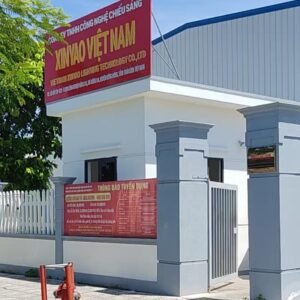
Based on the provided content from SHINEU¡¯s Home/About pages: SHINEU LIGHTING TECHNOLOGY CO., LTD. (founded 2009) is a holiday and seasonal decorative lighting manufacturer/supplier offering design, development, manufacturing, processing, and supply chain solutions, with a 5,000 m2 Vietnam production facility, export focus (stated 100% export with 85% to North America/Europe), and product certifications mentioned including UL, CUL, CE, GS, plus OEM/ODM services.
References
- https://shineulight.com/ (product groups, IP mentions, certifications, services)
- https://shineulight.com/about/ (company intro, Vietnam factory size, export/certification claims, OEM/ODM)
- https://shineulight.com/product-category/garden-lights/ (Garden Lights category listing)
- https://shineulight.com/product-category/garden-lights/solar-garden-light/ (Solar Garden Light category listing)
- https://www.rhs.org.uk/ (general garden planning guidance)
- https://www.thespruce.com/ (consumer home-and-garden lighting basics)
- https://www.homedepot.com/ and https://www.lowes.com/ (transformer/fixture spec comparisons; verify ratings)
- https://www.youtube.com/ (installation walkthroughs; validate with electrical best practices)
Disclaimer: Electrical requirements vary by country/region. Use outdoor-rated equipment and follow local codes and manufacturer instructions.