Low voltage LED garden lights are usually the better choice when the priority is consistent brightness, professional-looking coverage, and reliable operation across long winter nights. Solar garden lights are typically better when the priority is no wiring, quick placement, and decorative accents in areas far from power. The ¡°better¡± option depends on the installation environment, nightly run-time expectations, and how critical the lighting is for safety.
Contents
- Decision in 60 seconds (recommendations by use case)
- What each system is (and what it is not)
- Head-to-head comparison (performance, cost, maintenance)
- Data charts: run-time, cost, and reliability factors
- Which is better for pathways, patios, trees, and sheds?
- The hybrid approach many homeowners prefer
- FAQ (6)
- SHINEU context & internal links
- Sources & outbound links
Decision in 60 seconds (use-case recommendations)
Choose low voltage LED when:
- Lighting is for walking safety (steps, main paths, driveway edges).
- Brightness must be consistent all night, year-round.
- The design requires uniform coverage (no dark gaps).
- The homeowner wants timers/photocells and scalable expansion.
Choose solar when:
- Wiring is not possible or not desired (rentals, remote beds).
- The goal is decorative accent, not task-level lighting.
- The location receives strong daily sun exposure.
- Fast seasonal installation matters more than precision.
A practical summary: for ¡°must-work¡± lighting, low voltage tends to win. For ¡°nice-to-have sparkle¡± in sunny locations, solar can be excellent.
What each system is (and what it is not)
Low voltage LED garden lights (typically transformer-based)
A low voltage landscape lighting system uses a transformer to reduce household power and distribute it through outdoor-rated cable to multiple fixtures. This design is popular for permanent installations because it supports predictable output, structured layouts, and centralized control (timer/photocell).
Solar garden lights (self-contained fixtures)
Solar garden lights typically integrate a small solar panel, battery, and LED source into each unit. They require no power cabling, but their nightly performance depends on sun exposure, battery health, and seasonal daylight length.
Key distinction: low voltage systems are powered from the home (stable input), while solar systems are powered by the day¡¯s sunlight (variable input). Most ¡°which is better?¡± outcomes are explained by this one difference.
Low voltage LED vs. solar: head-to-head comparison
| Factor | Low voltage LED garden lights | Solar garden lights |
|---|---|---|
| Brightness consistency | Typically consistent night-to-night when installed correctly | Varies with weather, shading, and battery age |
| All-night run time | Easy to schedule for long durations | Often limited by battery capacity and charge quality |
| Installation effort | Moderate: cable routing + transformer placement | Low: place and stake (sun exposure required) |
| Design flexibility | High: mix fixture types, reposition, expand runs | Medium: easy to move units, but each unit is independent |
| Reliability in winter / long nights | Typically stronger (dependent on grid power and components) | Often weaker due to shorter daylight and colder battery performance |
| Maintenance | Occasional: connector checks, fixture cleaning | Battery replacement over time; panel cleaning; placement optimization |
| Best fit | Pathways, steps, driveway edges, structured landscape design | Garden accents, decorative strings, remote corners, rentals |
Data charts (what typically drives performance)
Chart 1 ¡ª Performance drivers: what affects each system most
Interpretation: solar is dominated by environmental inputs; low voltage is dominated by installation quality (layout, connections, sizing).
Chart 2 ¡ª Operating cost example for low voltage LED landscape lighting
Example uses 6 hours/night, 30 days, electricity at $0.15/kWh. This is for planning only (rates vary by region).
| Total system wattage | Monthly energy (kWh) | Estimated monthly cost |
|---|---|---|
| 30 W | 5.4 | $0.81 |
| 60 W | 10.8 | $1.62 |
| 120 W | 21.6 | $3.24 |
| 200 W | 36.0 | $5.40 |
Method: ( text{kWh/month} = frac{text{Watts}}{1000} times text{hours/day} times 30 ).
Chart 3 ¡ª Reliability scorecard (typical real-world outcomes)
| Scenario | Low voltage LED | Solar | Reason |
|---|---|---|---|
| Shaded front walkway | Strong | Weak | Solar panels underperform in shade; low voltage is independent of sun |
| Remote garden bed (no nearby power) | Moderate | Strong | Solar avoids trenching and long cable runs |
| Long winter nights | Strong | Moderate¨CWeak | Shorter days reduce charge; batteries age and cold impacts output |
| Premium ¡°architectural¡± look | Strong | Moderate | Low voltage supports consistent intensity and layout control |
Which is better for common outdoor areas?
Pathways and steps
For safety lighting, low voltage is typically preferred because it delivers consistent guidance lighting. If solar is used, it should be treated as supplemental rather than the primary safety layer¡ªespecially in shaded sites.
Patios, pergolas, and entertainment zones
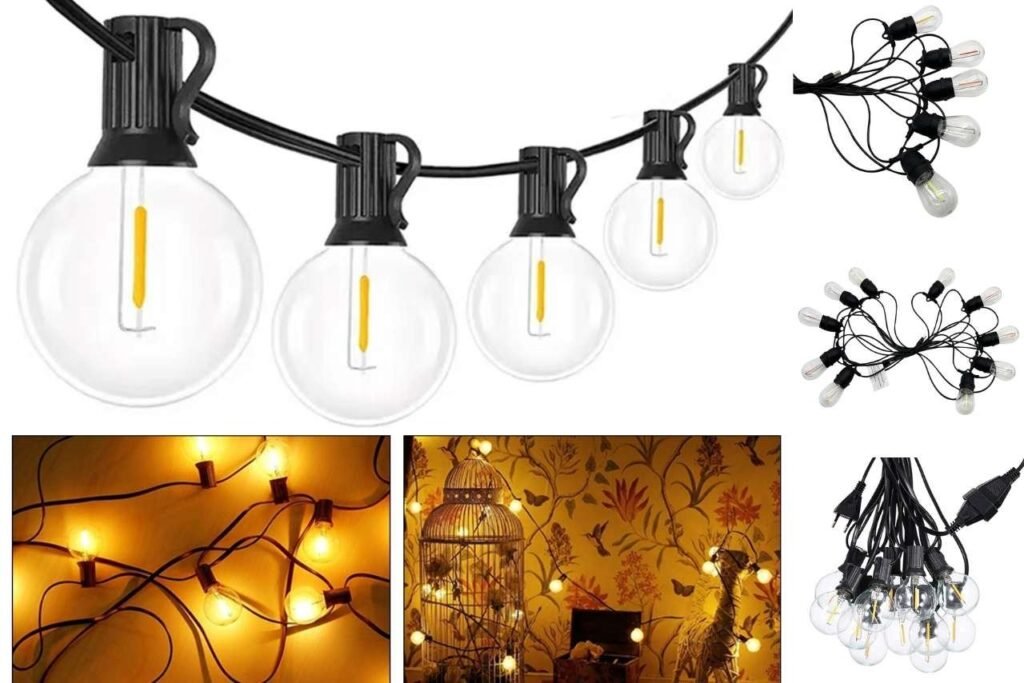
Either system can work. Solar string lights can be convenient where sun exposure is strong. Low voltage fixtures can provide more predictable ambiance and integrate with timers for scheduled evenings.
Trees and focal landscaping features
If the goal is controlled uplighting or downlighting, low voltage systems generally provide better aiming and repeatability. Solar can still work for decorative sparkle around shrubs and flower borders.
Sheds, side yards, and distant corners
Solar often wins when wiring is inconvenient. Many homeowners use solar near sheds for quick illumination without trenching¡ªprovided the panel placement receives adequate sun.
A hybrid approach that often performs best
A common professional approach is to use low voltage LED lights for ¡°core infrastructure¡± (main paths, steps, entrance) and solar fixtures for decorative accents or remote garden areas. This reduces installation complexity while maintaining a reliable safety baseline.
Hybrid blueprint (simple and effective)
- Main path + steps: low voltage LED
- Feature tree or wall texture: low voltage spotlight/uplight
- Flower beds and seasonal d¨¦cor: solar accents
- Remote edges: solar if sun exposure is strong; otherwise, extend low voltage branch
FAQ (6)
Which is brighter: low voltage LED or solar garden lights?
In typical real-world installations, low voltage LED systems provide more consistent brightness because they are powered from the home and do not depend on daily solar charging. Solar brightness depends heavily on sun exposure, panel cleanliness, and battery condition.
Do solar garden lights work in shade?
Many solar fixtures will operate in partial shade, but output and run time usually decline when panels receive limited direct sunlight. For shaded walkways that need reliable lighting, low voltage systems are usually a more dependable solution.
Are low voltage garden lights expensive to run?
LED-based low voltage systems are often inexpensive to operate. For example, a 120W system running 6 hours per night at $0.15/kWh is estimated around $3.24/month (planning example; actual rates vary).
Which option is better for winter?
Low voltage typically performs better during winter because it does not rely on short daylight hours for charging. Solar performance often declines due to reduced sun time and battery limitations as the system ages.
What matters more than ¡°brand¡± in low voltage installations?
Installation quality is critical. The most common causes of poor performance are voltage drop from long runs, weak connector seals, and undersized transformers. A well-planned layout with reliable outdoor-rated connections often matters more than cosmetic fixture design.
Can solar and low voltage be mixed in the same yard?
Yes. Many homeowners use low voltage for safety-critical zones and solar for decorative accents or remote areas. This mixed design often provides the best balance of reliability, cost, and installation effort.
SHINEU context & internal links
Based on the provided shineulight.com content, SHINEU LIGHTING TECHNOLOGY CO., LTD. was founded in 2009 and operates as a manufacturer and supplier of holiday and seasonal decorative lighting. The company describes a Vietnam production facility of 5,000 square meters serving the US, UK, and German markets and states that products are certified to UL, CUL, CE, and GS. It also highlights OEM/ODM services and supply-chain support for North America, Europe, and the UK.
SHINEU¡¯s public catalog includes a broad outdoor decorative range. The Solar Garden Light category page lists 62 results, including products such as ¡°48FT S14 Solar Powered String Lights¡± and ¡°G40 Patio Light Solar Garden Lights,¡± indicating coverage across string-style and decorative garden formats.
Internal links (required anchor text)
Note for readers: solar products are optimized for charging autonomy and weather exposure; low voltage systems are optimized for consistent scheduled output. Selection should match the application (safety vs accent) and site conditions (sun vs shade).
Sources & outbound links
The SHINEU company statements and category counts referenced above are drawn from the user-provided text of the linked pages. Additional outbound references below reflect commonly cited homeowner guidance and market-wide product specification sources used to cross-check typical installation practices and buyer considerations.
- SHINEU Home: https://shineulight.com/
- SHINEU About: https://shineulight.com/about/
- SHINEU Garden Lights category: https://shineulight.com/product-category/garden-lights/
- SHINEU Solar Garden Light category: https://shineulight.com/product-category/garden-lights/solar-garden-light/
- Royal Horticultural Society (general outdoor planning context): https://www.rhs.org.uk/
- The Spruce (consumer outdoor lighting tips): https://www.thespruce.com/
- Home improvement retailers for spec comparisons (transformers, cable, fixtures): https://www.homedepot.com/, https://www.lowes.com/
- Video installation walk-throughs (verify against local codes): https://www.youtube.com/
Disclaimer: This article provides general educational information for a global audience. Local electrical codes, weather conditions, and product standards vary by country. For permanent installations, consult qualified installers and follow manufacturer instructions.