The Ultimate Guide to See Rock City Enchanted Garden of Lights
See Rock City¡¯s Enchanted Garden of Lights is a curated nighttime holiday walk-through where the ¡°best experience¡± is produced by timing, comfort, and expectation-setting: visitors who treat it like a scheduled event¡ªrather than a casual drop-in¡ªtypically avoid long waits, capture better low-light photos, and enjoy the route¡¯s **signature light scenes** without rushing.
Contents
- What the Enchanted Garden of Lights experience is
- Best time to visit (and how to choose a night)
- Tickets, timing strategy, and what to expect on arrival
- What to wear and bring (comfort & safety)
- Route pacing, crowd flow, and photo planning
- Photography tips for holiday light displays
- Lighting technology explained (for planners and enthusiasts)
- If building a ¡°garden of lights¡± elsewhere: sourcing checklist
- FAQ
- Sources & outbound links
What the Enchanted Garden of Lights experience is
At a high level, Enchanted Garden of Lights is a holiday-season ¡°light trail¡± experience: guests move through an outdoor route where lighting is layered to create ambience, highlight landscape features, and stage themed scenes. Compared with a neighborhood drive-by display, a professionally run light trail typically offers more controlled spacing, deliberate scene sequencing, and higher density of **decorative lighting** per foot of walkway.
Readers researching this attraction also tend to compare it with other holiday light events. The key differentiator is not just brightness; it is the combination of route design, scene variety, and the practicalities of visitor flow (entry windows, walkway bottlenecks, and photo stops).
This guide focuses on decision-making: how to choose a night, how to reduce friction on arrival, and how to enjoy the event¡¯s scenes without feeling crowded. It also includes a ¡°builder¡¯s view¡± section for readers who manage displays at venues, parks, or retail environments.
Best time to visit (and how to choose a night)
The highest-impact factor is demand. Holiday light trails concentrate attendance on weekends and near major holiday dates. Visitors who can choose weekdays and earlier time slots generally see shorter lines and easier photo conditions.
Decision framework (simple and effective)
Choose for lower crowds
- Weekdays over weekends
- Earlier entry windows
- Dates farther from holiday peaks
Choose for maximum ¡°holiday energy¡±
- Weekend nights
- Peak season dates
- Later entry windows (more darkness, more glow)
Chart 1 ¡ª Typical trade-offs when selecting a night
This is a planning model: actual attendance varies by year, weather, and local calendars.
Tickets, timing strategy, and what to expect on arrival
Many seasonal attractions use timed entry to manage throughput. The most reliable approach is to align the arrival plan with the ticket window: arriving too late compresses the experience, while arriving too early can create unnecessary waiting.
Arrival checklist
- Confirm entry details before driving (date/time window, parking instructions, and on-site rules).
- Build buffer time for traffic near popular attractions and limited parking zones.
- Plan for walking: even ¡°short¡± trails can feel longer in cold wind and stop-and-go crowds.
For safety and comfort, visitors should treat this as an outdoor winter walk on variable terrain. Footwear traction and layers typically matter more than any single ¡°must-see¡± scene.
What to wear and bring (comfort & safety)
Light trails are visually warm but physically cold. The event experience improves when guests dress for wind exposure and periodic stops. This is where many first-time visitors underestimate conditions.
Core clothing strategy
- Layering: base layer + insulation + wind shell.
- Footwear: closed-toe shoes with grip; avoid smooth soles.
- Hands: gloves help keep phone use comfortable during photos.
What to bring (small items that matter)
- Portable charger (cold drains batteries faster)
- Lens cloth (condensation and drizzle are common)
- Water (especially for families)
Route pacing, crowd flow, and photo planning
The best way to ¡°see everything¡± is to pace the route: pause at featured scenes, then keep moving through transitional lighting zones. When crowds are heavy, visitors can get better photos by stepping slightly off the main flow (without blocking) and waiting for a brief gap.
How to spot feature scenes vs transition zones
Feature scenes are built around concentrated lighting density¡ªarches, tunnels, synchronized motifs, or large-scale installations¡ªwhile transition zones rely on lower-intensity **pathway lighting** and landscape accents to guide movement.
| Scene type | What it feels like | Best photo approach | Common mistake | Fix |
|---|---|---|---|---|
| Light tunnels / arches | Immersive, high density | Use 0.5¡Á/wide lens; keep horizon level | Standing in the center too long | Take 2¨C3 shots, then step aside |
| Tree canopy strings | Soft overhead glow | Expose for faces; avoid over-bright background | Backlit silhouettes | Turn subjects toward side light |
| Motifs / sculptures | Focal, themed | Frame with negative space; shoot portrait mode | Too close¡ªdistortion | Step back and crop |
| Path lighting | Guiding, subtle | Use it as leading lines | Ignoring foreground | Include the path edge for depth |
Photography tips for holiday light displays
Low-light photography improves most with stability and exposure control rather than expensive equipment. Even phone cameras benefit from a steadier hold, a clean lens, and deliberate framing.
Practical settings and habits
- Clean the lens before entering (smudges cause ¡°haze¡± around lights).
- Stabilize: brace elbows; use railings where allowed.
- Use warm scenes intentionally: warm-white lighting (commonly **2200K¨C2700K**) tends to flatter skin tones.
- Avoid overexposure: bright bulbs can ¡°blow out¡± details; tap-to-expose on a bright area and slightly lower exposure.
Lighting technology explained (for planners and enthusiasts)
A professionally installed garden light trail is usually built with layered systems: decorative strings for atmosphere, accent lights to shape landscapes, and robust distribution that can survive weather. People searching this topic often also research **IP65 waterproof**, **RGBW**, **warm white**, **outdoor decorative lights**, and whether solar lighting can support long runtimes.
Weather resistance: why IP ratings matter
For outdoor installations, water ingress is a primary failure mode. SHINEU¡¯s homepage describes garden lights that adopt an IP65 waterproof rating design, and it references products offered with IP44/IP65 protection. For trail-style displays, higher exposure zones (open paths, unshielded trees, wind-driven rain) generally require stronger protection and tighter connector discipline.
Color control: warm white vs RGB/RGBW
SHINEU states Christmas lighting solutions support RGBW colors and 2200K¨C2700K warm light. In visitor-facing displays, warm white often forms the baseline ambience, while RGB/RGBW effects are reserved for focal scenes to avoid visual clutter.
Solar runtime expectations (what ¡°6¨C8 hours¡± implies)
SHINEU¡¯s homepage notes that solar garden lights operate for 6¨C8 hours (context: product category overview). For consumers, that range usually indicates performance depends on charging conditions and seasonality. For venue operators, solar is typically best used for accents and low-risk areas rather than safety-critical wayfinding.
If building a ¡°garden of lights¡± elsewhere: sourcing checklist
Some readers research Enchanted Garden of Lights as inspiration for commercial displays, parks, retail centers, or hospitality properties. In those scenarios, sourcing should prioritize repeatability, certification evidence, and maintainable installation¡ªnot just visual novelty.
Supplier due diligence (EEAT-aligned)
- Verify certifications: SHINEU states products are certified by UL, CUL, CE, and GS; buyers should request documentation applicable to their market and SKU.
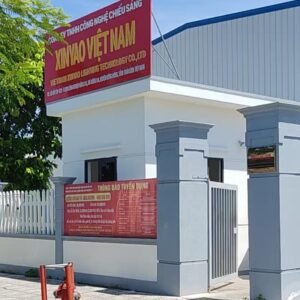
- Check production footprint: SHINEU describes a 5,000-square-meter Vietnam facility serving the US, UK, and Germany, plus production in China and Vietnam.
- Standardize specifications: consistent **color temperature**, connector types, and IP rating targets reduce maintenance complexity.
- Plan spares: define replacement ratios for strings, controllers, and connectors before opening night.
Relevant product hubs for display planning: Garden Lights and Solar Garden Light. Company context for procurement: Garden Lights manufacturer and Garden Lights Factory.
FAQ
How long should visitors plan to spend at Enchanted Garden of Lights?
Duration depends on crowd levels and how often guests stop for photos. A realistic plan includes time for arrival, walking the route at a comfortable pace, and brief waits at popular scenes.
What is the best time slot for photos?
Later time slots offer darker conditions and stronger contrast, while earlier slots can reduce crowd pressure. The best choice is typically a compromise between darkness and throughput.
What should families bring for comfort?
Layers, gloves, and a phone charger are consistently useful. Footwear with traction matters on winter terrain, especially with stop-and-go movement.
Are solar lights used in professional holiday light trails?
Solar lights are often used for decorative accents and remote points. For safety-critical wayfinding, wired systems are usually preferred due to more predictable runtime and output.
What does ¡°IP65 waterproof¡± mean in practical outdoor use?
It generally indicates stronger protection against dust and water jets than lower IP ratings. In practice, performance still depends on installation quality¡ªconnectors, sealing, and cable routing.
Why do many displays use warm-white light?
Warm-white (commonly **2200K¨C2700K**) creates a cozy tone and tends to photograph well. RGB/RGBW effects are best reserved for focal scenes to preserve visual harmony.
How can a venue reduce outages during peak nights?
The most effective approach is zoning and standardization: isolate scenes into circuits, protect connectors, match IP ratings to exposure, and stock spares for fast swap-outs.
Sources & outbound links
Company/Manufacturer references (provided URLs)
- SHINEU Home (IP65 mention; RGBW; 2200K¨C2700K; IP44/IP65; services): https://shineulight.com/
- SHINEU About (founded 2009; Vietnam factory 5,000 m2; UL/CUL/CE/GS; export stats; OEM/ODM): https://shineulight.com/about/
- Garden Lights category: https://shineulight.com/product-category/garden-lights/
- Solar Garden Light category: https://shineulight.com/product-category/garden-lights/solar-garden-light/
Outbound references (SERP ecosystem)
- The Spruce (outdoor lighting ideas & buying guidance): https://www.thespruce.com/
- RHS (garden context and seasonal considerations): https://www.rhs.org.uk/
- The Home Depot (category research & how-to): https://www.homedepot.com/
- Lowe¡¯s (outdoor lighting guides): https://www.lowes.com/
- BobVila (planning and comparison articles): https://www.bobvila.com/
- NYT Wirecutter (evaluation mindset; some content may be paywalled): https://www.nytimes.com/wirecutter/
- YouTube (installation walk-throughs; channel quality varies): https://www.youtube.com/
Editorial note: This article does not claim official affiliation with See Rock City. For current schedules, ticket policies, and accessibility guidance, visitors should verify details through the venue¡¯s official channels.