Choosing solar garden lights is easy if you only want ¡°something that glows.¡± It gets harder when you want lighting that still looks good after a few months of rain, actually lasts through the night, and matches the way you use your yard.
This guide gives you a repeatable selection process based on the components that determine performance: panel size and placement, battery capacity and chemistry, LED efficiency, controller modes, and weather sealing (IP rating). Use it whether you are shopping retail, upgrading an existing layout, or specifying products for a property.
Step 1: Identify your ¡°lighting job¡± before you compare products
Start by defining what you need each zone to do. Most yards have a mix of these jobs:
- Path guidance: low-glare markers that outline a walkway or garden edge.
- Step safety: controlled downward light so you can see risers and edges.
- Accent lighting: highlighting a tree, feature plant, wall texture, or sculpture.
- Entertaining ambience: warm, decorative glow for patios and seating areas.
- Entry/security supplement: brighter output (often with motion activation) near doors, gates, sheds.
| Yard job | Best solar light types | What ¡°good¡± looks like | Common mistake |
|---|---|---|---|
| Walkway definition | Stake/path lights, low bollards | Even spacing, soft diffusion, low glare | Buying the brightest light and creating harsh hotspots |
| Steps & edges | Step lights, wall/deck lights | Downward beam with shielding | Using stake lights that don¡¯t illuminate the step surface |
| Focal accents | Adjustable spotlights | Aimable head, stable mount, clean beam | Placing the panel in shade and blaming the light |
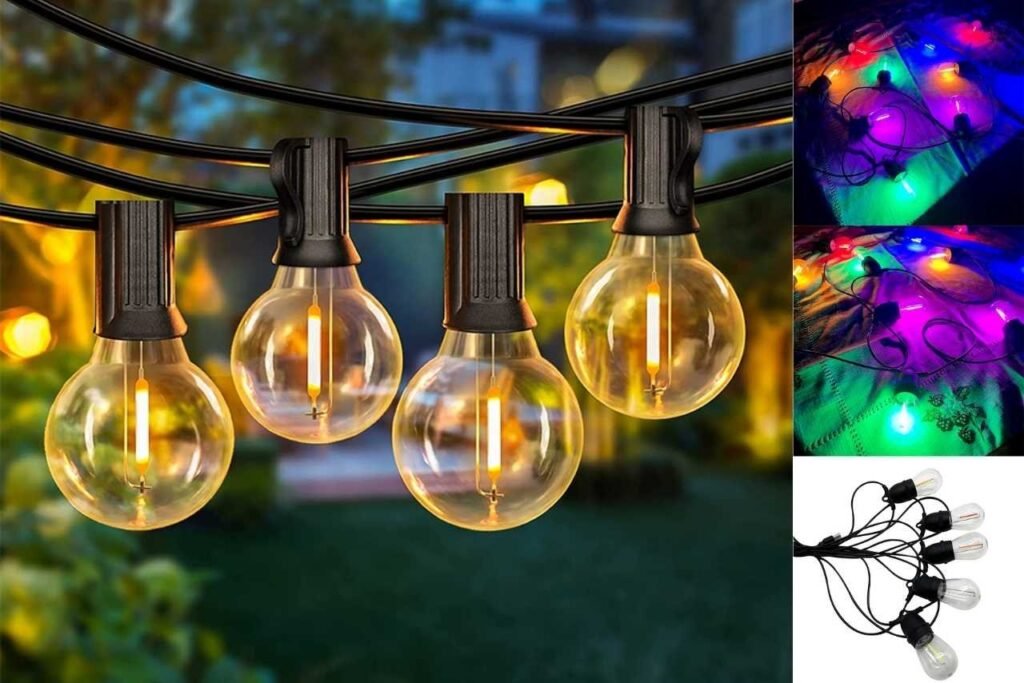
| Patio ambience | Solar string lights, lanterns | Warm color temperature, longer runtime at lower output | Assuming ¡°bulb look¡± equals brightness |
| Entry/security | Wall-mounted solar with PIR motion | Wide flood + motion boost | Expecting constant 1000+ lumens all night in winter |
Step 2: Use realistic brightness targets (lumens) instead of marketing claims
Lumens tell you how much visible light a fixture can produce. But for solar, the key question is: how many lumens for how long, and under which mode (constant-on vs. motion boost).
| Use case | Typical effective lumen range (per fixture) | Notes |
|---|---|---|
| Decorative path marking | 5¨C30 | Best when you want subtle wayfinding without ¡°airport runway¡± glare. |
| Brighter walkway guidance | 30¨C100 | Spacing matters as much as lumens; look for diffusers and glare shields. |
| Step/edge visibility | 20¨C100 | Downward beam control usually beats raw lumens. |
| Accent spotlight (shrubs/walls) | 100¨C300+ | Narrower beam can look brighter on the target than a wide flood at the same lumens. |
| Entry/security supplement | 300¨C1200+ (motion/boost mode) | High numbers are often short-duration boost output; verify constant mode specs if available. |
Decision tip: If a listing only shows a huge lumen number but doesn¡¯t explain runtime modes, treat it as incomplete information and compare alternatives with clearer specs.
Step 3: Prioritize weatherproofing (IP rating) and outdoor build quality
In many yards, water ingress¡ªnot LED failure¡ªis the reason solar lights stop working early. When comparing products, check the IP rating and match it to your exposure.
- IP44: typically suitable for general outdoor conditions with splashing water.
- IP65: better protection against dust and water jets¡ªoften preferred for exposed installations, heavy rain, or frequent sprinkler contact.
According to the manufacturer information provided on Shineu Lighting¡¯s website, their garden lighting offering emphasizes IP44/IP65 waterproof options, with some garden light messaging highlighting IP65 for harsher outdoor weather and ¡°several years¡± of service life under appropriate conditions.
Step 4: Select a color temperature that matches your landscape
For most garden spaces, warm light is more flattering and less clinical. Many decorative outdoor products target a warm-white range around 2200K¨C2700K, which tends to complement greenery, wood, stone, and brick. If your yard design is modern and you want crisp contrast, you may prefer a cooler tone¡ªbut test first, because cooler light can feel harsh in natural landscaping.
Step 5: Understand runtime and ¡°smart¡± control modes
Solar lights usually follow one of these behaviors:
- Constant-on: easiest to live with for paths and stairs; output may be lower to last longer.
- Auto-dimming: starts brighter and reduces output to stretch runtime through the night.
- Motion-boost: low standby brightness, then high output when motion triggers (ideal near gates/doors).
If you need predictable light all night (especially in winter), look for designs that balance panel size, battery capacity, and controlled output rather than chasing maximum brightness.
Step 6: Make placement a ¡°spec¡±¡ªsun access is non-negotiable
The best solar light can¡¯t charge in shade. Before buying quantities, walk your yard and note where direct sun is strongest:
- Open-sky zones: best for solar panel exposure and reliable runtime.
- Partial shade zones: choose lower-lumen lights, dimming modes, or consider hybrid solutions.
- Heavy shade zones: consider wired/low-voltage, plug-in, or lights with remote panel capability (when available).
Quick test: If a spot receives less than a few hours of direct sun in peak season, don¡¯t plan on high output there.
Step 7: Pick the right form factor for stability and maintenance
Many buying disappointments come from ignoring the physical realities of a yard:
- Stake lights: fastest DIY install, but can tilt in loose soil or after heavy watering.
- Wall/deck lights: stable and often better for step safety¡ªprovided the mounting location has adequate sunlight.
- Solar string lights: excellent for ambience; choose a panel/battery sized for the length and desired runtime.
- Lanterns/tabletop: portable, but remember the charging location may not match where you use them at night.
A simple buying checklist you can screenshot
- Define the job: path, step, accent, ambience, or entry/security.
- Choose a type: stake, spotlight, wall/deck, string, lantern.
- Set lumen target: pick a realistic range for that job.
- Confirm IP rating: IP44 for general; IP65 for harsher exposure.
- Pick CCT: warm 2200K¨C2700K for most gardens.
- Plan placement: prioritize sun access; reduce expectations in shade.
- Decide runtime mode: constant-on vs dimming vs motion-boost.
- Buy a small test batch first: validate performance for 7 nights.
Where to start shopping (and how to source reliably)
If you want to browse a broad range of outdoor decorative options in one place, the Garden Lights category is a useful starting point; the page lists dozens of items (the site indicates 98 results) spanning multiple outdoor decorative styles, including string lighting and solar garden products.
If you are specifically evaluating solar fixtures, start with the dedicated Solar Garden Light category, then filter by the job you defined (path, accent, wall/deck, decorative).
For project buyers, importers, or brands looking for stable supply and customization, working directly with a Garden Lights manufacturer can streamline documentation, sampling, and OEM/ODM development. If you want background on facilities, footprint, and production setup, refer to the Garden Lights Factory page.
FAQ (4)
1) What are the best solar garden lights for a yard: stake lights or spotlights?
Stake/path lights are usually best for wayfinding and edging, while spotlights are better for accenting trees, walls, and focal plants. Many yards use both: stake lights to define routes and a few spotlights to create depth and visual interest.
2) Is IP65 necessary for solar garden lights?
Not always. IP44 can be sufficient for general outdoor placement. Choose IP65 if your lights will face heavy rain exposure, direct sprinkler spray, dusty conditions, or if you want more margin for harsh weather.
3) Why do my solar garden lights get dim after a few months?
The most common reasons are reduced charging due to panel dirt/shading, battery capacity fading over time, and water ingress or corrosion. Cleaning panels, relocating lights to higher-sun areas, and choosing better-sealed products can improve consistency.
4) How many solar lights do I need for a pathway?
It depends on path length, fixture brightness, and the look you want. As a practical starting point, place lights evenly and test at night, then adjust spacing until the path edge is clearly defined without harsh hotspots. Buying a small set first and testing for a week is usually the fastest way to avoid overbuying.
References (external)
- Royal Horticultural Society (RHS) ¡ª landscaping and garden planning context.
- The Spruce ¡ª common outdoor lighting use cases and homeowner-focused selection advice.
- The Home Depot ¡ª product category conventions and specification language used in retail listings.
- Lowe¡¯s ¡ª outdoor lighting categories and installation considerations.
- Bob Vila ¡ª home improvement context for outdoor lighting decisions.
- The New York Times ¡ª general product evaluation and testing-driven consumer guidance (site-level reference).