Why solar powered garden lights are worth getting right
Solar powered garden lights can make paths safer, highlight landscaping, and extend outdoor use¡ªwithout trenching cable or paying an electrician for every fixture. But results vary wildly because ¡°solar light¡± is not one product category; it¡¯s a system made of a photovoltaic panel, a rechargeable battery, an LED light engine, optics, a controller, and weatherproof housing.
This guide breaks down how to choose the best solar powered light for garden spaces based on measurable criteria (brightness, runtime, battery chemistry, charging behavior, IP rating, control modes, and real placement constraints). It also includes practical templates, comparison tables, and a short FAQ to help you buy with confidence for different climates and use cases.
Quick definitions: what ¡°best¡± means for garden solar lighting
¡°Best¡± depends on what you¡¯re optimizing for. In real gardens, most people care about one or more of these outcomes:
- Safety lighting: consistent, glare-controlled illumination on steps, paths, and edges.
- Accent lighting: highlighting plants, trees, walls, sculpture, or water features.
- Wayfinding: subtle markers (low lumen) that outline routes without overpowering the landscape.
- Decorative effect: warm ambience or patterned light, often lower brightness but higher aesthetic value.
- Lowest maintenance: longer battery life, robust seals, and easily replaceable components.
Throughout this guide, ¡°best¡± means best-fit for the job¡ªnot the highest lumen number on a listing.
At-a-glance: solar garden light types and where they work best
| Type | Best for | Typical brightness range (real-world) | Strengths | Watch-outs |
|---|---|---|---|---|
| Path / stake lights | Edges of walkways, beds, driveway borders | 5¨C80 lumens | Easy install; great for wayfinding | Often not bright enough for true task lighting |
| Spotlights (adjustable head) | Trees, facades, focal plants, signage | 50¨C400 lumens | Directional; more dramatic accents | Needs good placement to avoid glare; shadows amplify unevenness |
| Wall / fence / deck lights | Stairs, decks, gates, fence lines | 10¨C200 lumens | Good for safety; controlled beams | Mounting location may get less sun; winter output can drop |
| Step lights | Steps, stair risers, retaining walls | 10¨C100 lumens | Reduces trip risk; subtle | Low-angle light can glare if optics are poor |
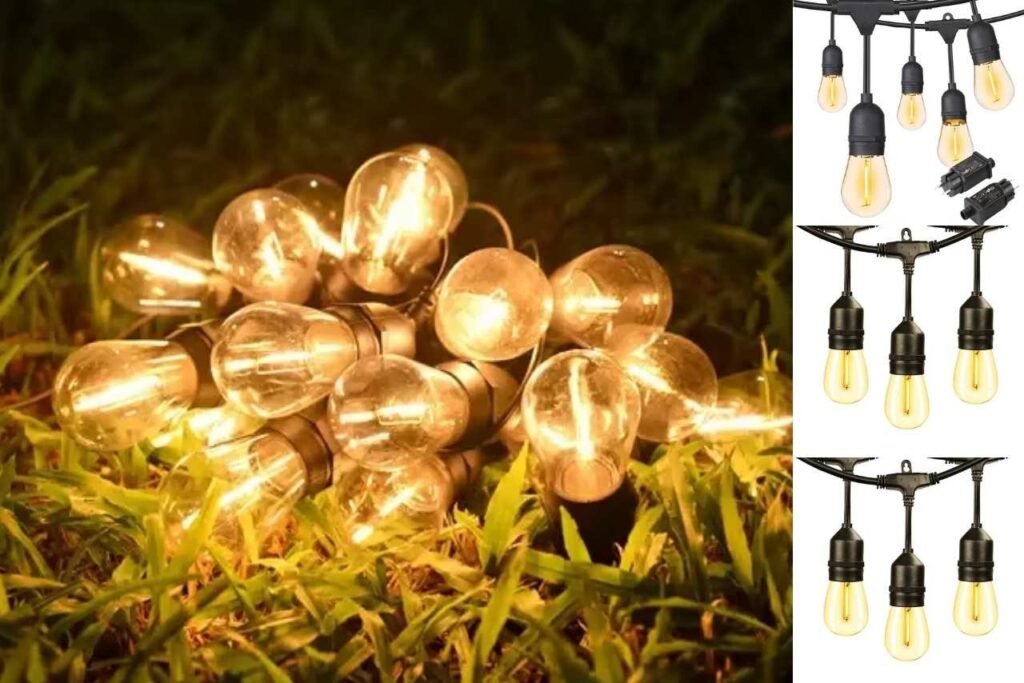
| String lights (solar) | Patios, pergolas, party/decor | Decorative (per-bulb often low) | Atmosphere; flexible layout | Runtime depends heavily on panel size and battery capacity |
| Lantern / tabletop (solar) | Dining tables, temporary zones | 20¨C200 lumens | Portable; easy seasonal use | More likely to be shaded at night use area |
| Integrated ¡°area light¡± fixtures | Small yards, sheds, entry areas | 200¨C1200+ lumens (varies) | Highest brightness potential | Marketing specs often optimistic; motion mode may be required |
How solar powered outdoor garden lights actually work (and what limits them)
Most solar garden lights are a simple energy flow system:
- Daylight charging: The panel converts sunlight into electricity (DC).
- Energy storage: A controller charges the battery (commonly lithium-ion or NiMH in many consumer products).
- Night activation: A light sensor (or voltage threshold) tells the controller to power the LED after sunset.
- LED + optics: LEDs emit light; lenses/reflectors shape the beam for a path, flood, or spot effect.
The limiting factors are usually:
- Solar input: panel size, angle, and shading (trees, fences, rooflines).
- Battery capacity + health: capacity shrinks over time and in cold weather.
- Controller behavior: brightness regulation, motion modes, and low-voltage protection.
- Optical efficiency: glare control and beam pattern can waste light even if lumen numbers look high.
The most important buying criteria (EEAT-first checklist)
1) Brightness: lumens matter¡ªbut only in context
For gardens, use lumens as a starting point, then judge whether the fixture type and beam control match the job:
- Path markers: typically 5¨C30 lumens per light for gentle outlining.
- Path safety: often 30¨C100 lumens per fixture, but depends on spacing and optics.
- Accent spotlight: commonly 100¨C300 lumens for shrubs, and higher for trees or walls.
Be cautious with listings that quote ¡°equivalent watts¡± or very high lumens without clarifying runtime mode. Many bright solar fixtures achieve headline lumens only in motion-boost mode.
2) Runtime: steady vs. adaptive output
Solar lights typically run in one of these patterns:
- Constant-on: stable brightness until low-voltage cutoff (simpler, but may not last all night).
- Dimming: starts bright then gradually dims to extend runtime.
- Motion sensor modes: low standby brightness with high output when motion triggers.
If you want ¡°all-night¡± lighting in winter, prioritize a combination of efficient optics, a larger panel, and a controller that manages energy sensibly.
3) Battery chemistry: what to look for
Battery specs are often hidden, but they strongly determine long-term satisfaction.
- Lithium-ion / LiFePO4 (where offered): typically higher energy density; better for brighter fixtures.
- NiMH (common in small stakes): often adequate for low-lumen markers.
What matters more than the label is whether the product is designed to protect the battery from overcharge/over-discharge and whether the battery is replaceable.
4) IP rating: the fastest way to avoid early failures
In outdoor garden environments, water and dust ingress kill solar lights faster than LED wear-out. As a baseline:
- IP44: suitable for splashes and typical weather when installation is reasonable.
- IP65: better protection against dust and water jets¡ªoften preferred for harsher exposure.
If your lights sit in sprinklers¡¯ direct spray, near ground puddling, or coastal conditions, aim higher on sealing and materials.
5) Color temperature (CCT): choose the mood intentionally
Warm white (roughly 2200K¨C2700K) typically looks more natural in gardens and complements plants, stone, and wood. Cooler white can appear brighter, but it may feel harsh and may attract more insects depending on spectrum and local conditions.
6) Materials and mounting: wind, soil, and real life
Stake lights are convenient, but loose soil and watering cycles can tilt them quickly. Wall/deck-mount lights can be more stable¡ªif the mounting surface gets enough sun or the product supports remote panels.
Data-first selection tool: match your garden goal to specs
| Goal | Recommended fixture types | Suggested lumen target (per fixture) | Beam / optics tip | Runtime strategy |
|---|---|---|---|---|
| Define a walkway without glare | Path/stake, low bollard, step markers | 5¨C50 | Diffused lens; avoid exposed ¡°point¡± LEDs | Constant-on or gentle dimming |
| Make steps safer | Step lights, wall/deck lights | 20¨C100 | Shielded downward beam; cut-off edges | Constant-on preferred |
| Highlight a tree or feature | Adjustable solar spotlight | 150¨C400 | Narrower beam for drama; avoid spill into eyes | Motion-boost acceptable if area is visited occasionally |
| Patio ambience | Solar string lights, lanterns | Decorative | Warm CCT for comfort | Lower brightness = longer runtime |
| Entry/security supplement | Wall-mounted area light with PIR sensor | 300¨C1200+ (boost mode) | Wide flood; avoid neighbor-facing glare | Standby + motion boost |
Solar garden lights vs. hardwired: a complete comparison
| Factor | Solar powered garden lights | Hardwired / low-voltage wired lights | Best choice when¡ |
|---|---|---|---|
| Installation | DIY, fast | More planning; may need electrician | You want quick upgrades or renters/seasonal setups |
| Reliability in winter | Varies with sun and battery | Stable (depends on power supply) | You need consistent all-night output year-round |
| Brightness scalability | Limited by solar/battery | Easy to scale with transformer/wiring | You need higher, predictable lumens for large areas |
| Operating cost | Near-zero electricity cost | Ongoing electricity use | You prioritize lower energy use and simpler bills |
| Maintenance | Battery aging; panel cleaning | Bulb replacement; wiring issues over time | You can accept battery refresh every few years |
| Design flexibility | Move anytime | Fixed layout once installed | Your garden layout changes or you redecorate often |
Best solar powered garden lights for cloudy climates
Cloudy regions and winter gardens challenge solar lighting because charging time shrinks and peak irradiance drops. To get better performance:
- Choose fixtures with larger panels relative to the light output.
- Prefer designs with adaptive brightness (smart dimming) or motion boost.
- Look for stronger weather sealing (often IP65 where available).
- Install where they get the most direct sky exposure¡ªsouth-facing (north-facing in Southern Hemisphere), away from tree canopies.
In heavy shade, even the best fixture can¡¯t ¡°make¡± energy. In those zones, consider a hybrid approach: solar in open areas, and wired/low-voltage or plug-in lighting in permanently shaded corridors.
Evaluating lifespan: what actually wears out
LEDs are usually not the first failure point. Most early failures come from:
- Battery capacity fade (especially with frequent deep discharge).
- Water ingress through seals, switches, or cable entries.
- Panel degradation or cloudy lenses reducing charging/lighting output.
- Connector corrosion in humid/coastal climates.
A longer-lasting solar powered garden light typically combines better sealing, conservative brightness vs. panel size, and a battery that¡¯s protected by the controller.
How to maximize efficiency: placement and setup that makes a difference
- Do a 24-hour shade check: morning and afternoon shade can cut charge more than you expect.
- Angle for sun, not for looks: tilt panels toward peak sun exposure where possible.
- Clean panels seasonally: dust, pollen, and bird droppings reduce charging.
- Avoid over-lighting: fewer, better-placed fixtures often look more premium than many dim points.
- Use the right mode: constant-on for pathways; motion boost for entries; dimming for all-night ambience.
Where to find the best solar garden lights for sale online (and how to vet listings)
Many shoppers start on marketplaces, but quality is inconsistent. Whether you buy retail or source B2B, vet products with the same discipline:
- Look for verifiable specs: IP rating, color temperature, battery type/capacity (when provided), and clear runtime modes.
- Review photos for build clues: gasket lines, sealed switches, lens thickness, and mounting hardware quality.
- Confirm certification/quality systems where relevant: for larger projects or professional buyers, supplier documentation matters.
- Prioritize support: replacement parts, battery replacement options, and warranty clarity.
If you are sourcing at scale (brand, distributor, project contractor), working with a Garden Lights manufacturer can simplify customization and compliance documentation. For ready-to-ship categories, you can browse Garden Lights collections, including dedicated Solar Garden Light options. If you want more background on production capability and quality approach, visit the Garden Lights Factory profile.
Recommended solar garden lighting plan (simple layout recipe)
Use this as a repeatable approach for most gardens:
- Map the ¡°must-see¡± routes: front path, steps, gate, and transitions between surfaces.
- Assign fixture types: step lights for steps; path markers for edges; spotlights for focal plants.
- Set brightness tiers: safety zones brighter; decorative zones warmer and lower.
- Plan for shade: put solar in open sky areas first; avoid dense canopy locations.
- Test for 7 nights: observe runtime changes after cloudy days; adjust spacing or modes.
FAQ (3)
1) How many lumens do I need for solar powered garden lights?
For most gardens, 5¨C30 lumens per fixture works for subtle path marking, while 30¨C100 lumens suits brighter pathway guidance. Accent solar spotlights often perform best around 100¨C300+ lumens depending on how far they need to throw light and how reflective the target surface is.
2) Do solar garden lights work in winter or on cloudy days?
Yes, but performance typically drops because charging input is lower and batteries deliver less usable energy in cold temperatures. In cloudy climates, choose fixtures with larger panels, efficient optics, and energy-saving modes (dimming or motion-boost) and install them in the brightest available locations.
3) What is a good IP rating for outdoor solar garden lights?
IP44 is commonly adequate for general outdoor use, while IP65 is preferable for more exposed environments (direct spray, dust, harsher weather). The best choice depends on where the light is installed and how much water exposure it gets.
References (external)
- Royal Horticultural Society (RHS) ¡ª gardening context and landscape planning considerations.
- The Spruce ¡ª consumer-oriented outdoor lighting and garden content (useful for common use cases and terminology).
- The New York Times ¡ª general product-evaluation methodology and testing-driven consumer guidance (site-level reference).
- Bob Vila ¡ª home improvement context for outdoor lighting decisions.
- The Home Depot ¡ª category baselines and common specification language used in retail listings.
- Lowe¡¯s ¡ª retail category language and common fixture types.
- Amazon ¡ª marketplace reference for common solar light form factors and buyer concerns.
Disclosure: This article contains links to the brand¡¯s own category and company pages for readers who want to explore product options and manufacturing information.